
• Home
  • About
  • Resources

The Cruciform Pen

~ toward a cross-shaped life

The Cruciform Pen

Tag Archives: Old Testament Theology

Satan: God’s Servant

18 Thursday Dec 2014

Posted by thecruciformpen in Reviews

≈ Leave a comment

Tags

Biblical Theology, Canon, Old Testament Theology, Satan, Sydney Page

Satan

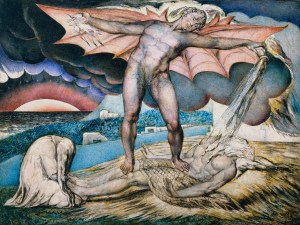
Sydney Page has a fascinating article about Satan [“Satan: God’s Servant.” Journal Of The Evangelical Theological Society 50.3 (2007): 449-465]. More specifically, it is about the biblical portrayal of the Satan figure. More often than  not, our thinking about angelic beings and mysterious figures like Satan is shaped more by popular imagination, movies, and artwork (like William Blake’s historical piece above). Page has gifted the church with a sound biblical basis for thinking about Satan.

In the article he studies the story of Job (and Satan’s role in the Job account). He demonstrates convincingly how “the Joban conception of Satan exercised significant influence on the rest of the biblical canon…how Satan is portrayed as a servant of God in Job, then…how later biblical texts pick up and use the Joban ideas” (449). Here is a great example how later biblical texts can echo earlier ones. And conversely, how earlier biblical texts can affect later ones. (Similar to Richard B. Hays’ project on the Gospels and also Paul)

The motif that Page finds recurring in various forms in the developing biblical tradition around the Satan figure has to do with Satan’s inimical subordination to God: “Although there is incontrovertible evidence of change and development in the concept of Satan in the biblical literature, this basic notion that Satan is under divine control appears repeatedly” (465). This has significant implications for our doctrine of God and the age old questions of theodicy.

One of the take-aways from the article relates to how we speak about Satan: “One must, therefore, be careful to avoid exaggerating the power of Satan and setting up a dichotomy between God and Satan that would suggest a particular action must be attributed to either one or the other. These alternatives are not mutually exclusive. Satan is God’s adversary, but whatever he does falls under the overarching sovereignty of God” (465).

The Psalms: Language for All Seasons of the Soul

25 Tuesday Nov 2014

Posted by thecruciformpen in Reviews

≈ Leave a comment

Tags

Biblical Theology, Old Testament Theology, Psalms, review

51L333+cl-L._SY344_BO1,204,203,200_

Most of the content of the book comes from the Psalms and Hebrew Poetry Consultation of the Evangelical Theological Society. So…much research has gone into these chapters. As with any multi-author book not all chapters are created equal. And while not every chapter was equally stimulating, the ones that were have changed the way I think about the Psalms forever (see final section of review).

Format

The extended bibliography in the back of the book is a valuable feature of the book. Over 80 resources (specifically related to the Psalms!) are listed and catagorized according to the following groups: Psalms Introductions, Commentaries, Teaching & Preaching, Theology of the Psalms, Psalms & Worship, and Related Resources. This will be a major help to the pastor, student, or anyone else who wants to fill their library with the best in Psalms literature.

The Scripture and subject indexes in the back also make it useful as a reference book.
The use of Hebrew font throughout the book is a major plus. Although, oddly, Willem Vangemeren’s chapter seems to be the only one which does not (e.g., pg. 39 he makes extensive use of transliteration…8 lines total of transliterated text!). Why he does not use a Hebrew font, like the rest of the authors in this book, is a mystery to this reviewer.

The footnotes…Let’s just say that my own personal amazon wish list grew exponentially as a result of the references in the footnotes.

Some Specific Delights

Walter Kaiser has a very interesting take on the theological significance of the use of acrostics in Hebrew poetry.

Robert Chisholm Jr. has a thought-provoking chapter on the interaction between the divinely inspired Hebrew writers and the mythological figures of their day (Leviathan, Rahab, Tannin, etc).

Andrew Schmutzer has done an excellent job of demonstrating a multiplex approach to Psalm 91. I will never read this Psalm the same again (or any references to the demonic realm in the New Testament for that matter). There are many layers of significance behind each passage and each has a depth and richness the begs to be mined.

Finally, chapters 12-14 have taught me a whole new way of reading the Palms. Before I read them as isolated and only loosely related pieces of poetry; now I see a story bing told with each psalm contributing something to the Psalter as a whole. Seeing the connections between the Psalms, understanding the bigger picture of the story that Psalter is telling, and being aware of the features that each book of Psalter lays emphasis on helps to see what each psalm contributes to the Biblical theology of the Psalter.

This book was provided by the publisher as a review copy.

Walter Eichrodt’s Theological Method

16 Sunday Nov 2014

Posted by thecruciformpen in People to Know

≈ Leave a comment

Tags

Biblical Theology, Covenant, Old Testament Theology, Walter Eichrodt

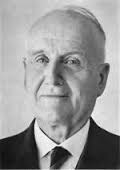
walter eichrodt

Biographical Information

Background

  • Born 1 August 1890 in Germany; Died 20 May 1978 in Switzerland

Education & Career

  • 1915 received doctorate from University of Heidelberg
  • 1922-1960 taught at Old Testament and History of Religion at University of Basel

His Theological Method

  • Emphasized the concept of covenant (understood under the tripartitite rubric of God’s relationship with his people, the world, and man) as the central theme of the OT.
  • Argued that we should study the OT via synchronic cross-sections that reveal the inner dynamics of Israelite faith.
  • Avoided organizing his theology around categories drawn from dogmatic theology (systematic theology), choosing instead to draw the categories right out of the OT itself.
  • Made extensive use of the results of historical research.
  • Sought to understand the OT in connection with other ANE religions (i.e., he interpreted the OT in light of its cultural context).
  • Understood the OT and NT as dependent upon one another in order to properly understand either and when studying a particular OT text he looked forward to see the end result in the NT (i.e., he interpreted the OT in light of its biblical context).

His Contribution to Old Testament Theology

  • Regarding biblical studies, he demonstrated the importance of emphasizing the Bible’s theological message rather than merely its religious history. In this way, he helped establish OT theology in its normative aspect for believers today.
  • He nevertheless showed how it was possible to use the results of historical-critical methods in order to understand the essence of the Old Testament’s theological message.
  • He legitimized the use of typological exegesis as an appropriate method of exegesis and explained way it was valuable in biblical theology for maintaining a close relationship and unity between the OT and NT.

Some Problems with His Method

  • The assumption that Israelite faith (and the covenant for that matter) does not evolve over time is questionable.
  • To identify the concept of covenant, or anything else, as the center of the OT does not do justice to the diversity of Scripture (e.g., where is the concept of covenant to be found in the Wisdom literature?).
  • So much focus on the Mosaic Covenant with the result that Abrahamic, Davidic, and New Covenants are neglected by comparison (not to mention other themes that might be within the OT).
  • Some found fault in his attempt to combine the study of the history of Israel’s religion with OT theology, claiming that these two belong in distinct and separate disciplines.

His Writings Available in English

“Covenant and Law.” Interpretation 20, no. 3 (1966): 302-321.

Ezekiel: A Commentary. Old Testament Library,  trans. Cosslett Quinn (Philadelphia: Westminster Press, 1970).

“In the Beginning” in Israel’s Prophetic Heritage, eds. B. W. Anderson and W. Harrelson (London: SCM Press, 1962): 1-10.

“Is Typological Exegesis and Appropriate Method?” in Essays on Old Testament Hermenuetics, ed. Claus Westermann (Richmond, VA: John Knox Press, 1963): 224-245.

“Law and The Gospel: Meaning of the Ten Commandments in Israel and For Us.” Interpretation 11, no. 1 (1957): 23-40.

Man in the Old Testament, trans. K. and R. Gregory Smith. Studies in Biblical Theology, no. 4 (London: SCM Press, 1961).

“Prophet and Covenant: Observations on the Exegesis of Isaiah” in Proclamation and Presence (Richmond, VA: John Knox Press, 1970): 167-188.

“Right Interpretation of the Old Testament: A Study of Jeremiah 7:1-15.” Theology Today 7, no. 1 (1950): 15-25.

Theology of the Old Testament, 5th revised edition, 2 vols, trans. J. A. Baker (Philadelphia: Westminster Press, 1961-1967).

Categories

  • Biblical Studies (20)
  • Historical Studies (12)
  • People to Know (27)
  • Poetry (2)
  • Prayers (7)
  • Research Topics / Book Ideas (3)
  • Resources (52)
  • Reviews (24)

Posts

  • February 2023 (1)
  • September 2022 (1)
  • October 2020 (1)
  • February 2020 (1)
  • December 2019 (1)
  • August 2019 (1)
  • February 2019 (3)
  • December 2018 (1)
  • June 2018 (1)
  • May 2018 (2)
  • March 2018 (6)
  • January 2018 (1)
  • November 2017 (1)
  • October 2017 (1)
  • May 2016 (4)
  • April 2016 (3)
  • March 2016 (10)
  • February 2016 (1)
  • January 2016 (4)
  • December 2015 (5)
  • October 2015 (1)
  • September 2015 (6)
  • February 2015 (1)
  • January 2015 (6)
  • December 2014 (12)
  • November 2014 (8)
  • October 2014 (1)

Enter your email address to follow this blog and receive notifications of new posts by email.

Join 46 other subscribers

Currently Reading

Blogs I Follow

  • Malcolm Guite
  • The Cruciform Pen
  • βιβλιοσκώληξ
  • Holy Writ & Sacred Witness
  • Griffin Paul Jackson
  • Koine-Greek
  • Biblical Studies
  • Bible Design Blog
  • Theological Studies
  • καὶ τὰ λοιπά
  • Euangelion
  • Evangelical Textual Criticism
  • NT Blog

Blog at WordPress.com.

Malcolm Guite

Blog for poet and singer-songwriter Malcolm Guite

The Cruciform Pen

toward a cross-shaped life

βιβλιοσκώληξ

βιβλιο: "book"; σκώληξ: "worm"

Holy Writ & Sacred Witness

...eyes on the Word; ears to the ground...

Griffin Paul Jackson

Word architect.

Koine-Greek

Studies in Greek Language & Linguistics

Biblical Studies

Bible Design Blog

Theological Studies

An Internet Resource for Studying Christian Theology

καὶ τὰ λοιπά

A blog by Daniel R. Streett all about Early Judaism, Biblical Studies, Koine Greek, καὶ τὰ λοιπά

Euangelion

toward a cross-shaped life

Evangelical Textual Criticism

toward a cross-shaped life

NT Blog

toward a cross-shaped life

  • Subscribe Subscribed
    • The Cruciform Pen
    • Join 46 other subscribers
    • Already have a WordPress.com account? Log in now.
    • The Cruciform Pen
    • Subscribe Subscribed
    • Sign up
    • Log in
    • Report this content
    • View site in Reader
    • Manage subscriptions
    • Collapse this bar
 

Loading Comments...