• Home
  • About
  • Resources

The Cruciform Pen

~ toward a cross-shaped life

The Cruciform Pen

Category Archives: People to Know

I. Howard Marshall Present with the Lord

13 Sunday Dec 2015

Posted by thecruciformpen in People to Know

≈ Leave a comment

Tags

Death, I. Howard Marshall, NT Theology, Tribute

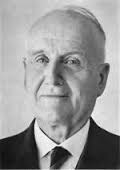
Yesterday, 12 December 2015, I. Howard Marshall passed from this world i-howard-marshallat the age of 81. Marshall was a conservative evangelical scholar whose work combined a high regard for the authority of Holy Scripture with a conviction that we are called to study it with the full use of our minds.
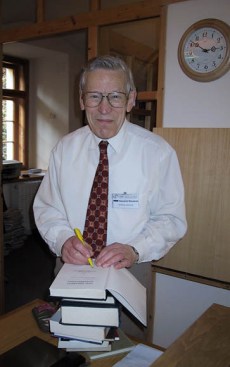
He made major contributions to many areas within New Testament studies. He published commentaries on many books of the NT, a New Testament Theology, a book on the doctrine of Inspiration, reference Bible dictionaries, works on NT interpretation methods, many articles, and the list goes on.

He has a special place in my heart because he was not just an academic scholar who stood aloof from the church. He spanned the gulf between the church and the academy. And moreover, he was a NT scholar who emphasized mission. He claimed that “New Testament theology is essentially missionary theology.” Here is the broader context of that claim:

New Testament theology is essentially missionary theology. By this I mean that the documents came into being as the result of a two-part mission, first, the mission of Jesus sent by God to inaugurate his kingdom with the blessings that it brings to people and to call people to respond to it, and then the mission of his followers called to continue his work by proclaiming him as Lord and Savior, and calling people to faith and ongoing commitment to him, as a result of which his church grows. The theology springs out of this movement and is shaped by it, and in turn the theology shapes the continuing mission of the church. The primary function of the documents is thus to testify to the gospel that is proclaimed by Jesus and his followers. Their teaching can be seen as the fuller exposition of that gospel. They are also concerned with the spiritual growth of those who are converted to the Christian faith. They show how the church should be shaped for its mission, and they deal with those problems that form obstacles to the advancement of the mission. In short, people who are called by God to be missionaries are carrying out their calling by the writing of Gospels, letters and related material. They are concerned to make converts and then to provide for their nurture, to bring new believers to birth and to nourish them to maturity.

I. Howard Marshall, New Testament Theology: Many Witnesses, One Gospel (Downers Grove, IL: InterVarsity Press, 2004), 34–35.

Here are two other tributes put out in honor of Marshall:

  • A Brief Tribute to I. Howard Marshall by Stanley Porter
  • I. Howrad Marshall, NT Scholar, Dies at 81 by Ray Van Neste at TGC

He will be greatly missed. May he rest in the fullness of joy!

Best Selling Books @ SBL 2015

10 Thursday Dec 2015

Posted by thecruciformpen in People to Know, Resources

≈ Leave a comment

Tags

ETS, SBL

Over at Evangelion Michael Bird has posted a link to a video from the SBL/AAR/ETS conference in Atlanta interviewing many of the publishers about their best selling books at the conference.

Check it out the video here: Best Sellers at SBL Book Exhibit 2015


Two Important Books Under $1

05 Thursday Feb 2015

Posted by thecruciformpen in People to Know, Resources

≈ Leave a comment

Tags

Douglas A. Campbell, Justification, Logos Bible Software, Pauline Theology, Stephen Westerholm

Right now Logos Bible Software is a great deal for two important books on the topic of Justification: 

Get this book for free: Justification Reconsidered: Rethinking a Pauline Theme by Stephen Westerholm (on Amazon it is currently $11.94) Justification reconsidered

Then get this book for just 99¢: The Deliverance of God: An Apocalyptic Rereading of Justification in Paul by Douglas A. Campbell (on Amazon it is currently $49.50)

Deliverance of God

If you want to be up to date on the status of ‘Justification’ in the last decade or two, these books will go a long way! Get a survey and critique of some of the key players in Pauline scholarship with Westerholm’s book. And dig deep down to have some of your closest held presuppositions on Paul’s theology challenged with Campbell’s tome on ‘Justification’ (also the longer of the two books by over a thousand pages!).

What To Read…

29 Thursday Jan 2015

Posted by thecruciformpen in People to Know

≈ Leave a comment

Tags

D. A. Carson, Georges Florovsky, Jürgen Moltman, John D. Zizioulas, John Goldingay, John Webster, Karl Barth, N. T. Wright, Richard B. Hays, T. F. Torrance, Tradition, Walter Brueggemann

I am currently reading N. T. Wright’s Surprised by Hope: Rethinking Heaven, the Resurrection, and the Mission of the Church. And I must say it is one of the most enjoyable reads in long while. I don’t remember the last time I’ve had so many “aha” moments about passages and concepts so familiar. Over and over again I found my assumptions delightfully challenged and reshaped.

This leads me to an important principle: It is beneficial (and enriching) to read authors from outside of our own traditions.

Lately, I have made a practice of intentionally reading people who write from within a different tradition than my own. And I have found it valuable for the following reasons:

  • it broadens my perspective of the church
  • it helps me to understand /relate to people within those traditions
  • it has potential to reveal blind spots within my own tradition
  • it removes unhelpful caricatures that flourish through “hearsay”
  • it teaches me how to disagree agreeably, if you know what I mean
  • it deepens my respect for the diversity of the body and reminds me that I don’t have to agree with everything someone says to be encouraged / edified by their work

The list could go on.

Here is a sample of some of the writers that I have read recently and the traditions they write from:

  • N.T. Wright – Anglican Communion (Church of England)
  • Karl Barth – Swiss Reformed (Confessing Church in Germany)
  • Walter Brueggemann – United Church of Christ
  • Richard B. Hays – United Methodist
  • T. F. Torrance – Church of Scotland
  • D. A. Carson – Evangelicalism [my own tradition]
  • John Webster – Anglican Communion (Church of England)
  • John Goldingay – Episcopal
  • Jürgen Moltmann – German Reformed

I have not read very much from the Orthodox tradition but I am eager to read something by Georges Florovsky or his pupil John D. Zizioulas, from within that tradition.

Learning How to Read Backwards…

14 Sunday Dec 2014

Posted by thecruciformpen in People to Know

≈ Leave a comment

Tags

Richard B. Hays

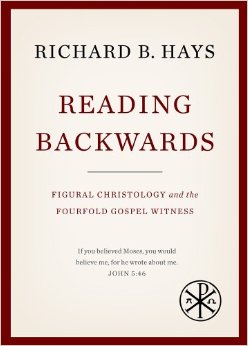
I just received Richard B. Hays’ new book, Reading Backwards: Figural Christology and the Fourfold Gospel Witness. 

reading backwards

The book is basically what he delivered as the Hulsean Lectures in the Faculty of Divinity at Cambridge University 2013-2014. Excited to read it! Review to come soon!

I am thankful for William Tyndale

10 Wednesday Dec 2014

Posted by thecruciformpen in People to Know

≈ Leave a comment

Tags

English Versions, William Tyndale

William_Tyndale

It is hard to overstate the significance of the work of William Tyndale in translating the Bile into English for the first time from Greek and Hebrew. In my opinion, the best biography out there on him is by David Daniell and it focuses on Tyndale as a translator. I highly recommend it!

In the introduction to his biography David Daniell writes the following:

William Tyndale gave us our English Bible. The sages assembled by King James to prepare the Authorized Version of 1611, so often praised for unlikely inspiration, took over Tyndale’s work. Nine-tenths of the Authorized Version’s New Testament is Tyndale’s. The same is true of the first half of the Old Testament, which is as far as he was able to get before he was executed outside Brussels in 1536

English phrases from Scripture for which we have Tyndale to thank (i.e., phrases which he coined and that went through to the Authorized Version and became deeply embedded within the English language):

  • ‘And they heard the voice of the Lord God as he walked in the garden in the cool of the day’ (Genesis)  [Daniell 3]
  • ‘God forbid’ (Paul’s μὴ γένοιτο in Romans) [Daniell 141]
  • ‘And all that heard it wondered, at those things which were told them of the shepherds. But Mary kept all those sayings, and pondered them in her heart’ (Luke 2) [Daniell 135]
  • ‘Finally, my brethren be strong in the Lord, and the power of his might’ (Ephesians 6) [Daniell 139]
  • ‘The signs of the times,’
  • ‘the spirit is willing,’
  • ‘Live and move and have our being,’
  • ‘fight the good fight’ [Daniell 142]
  • ‘the salt of the earth,’
  • ‘let there be light,’
  • ‘this thy brother was dead, and is alive again: and was lost and is found’
  • ‘there were shepherds abiding in the field’ [Daniell 1]

Tyndale invented some words that have remained in English usage till this day (‘scapegoat’  for example). But perhaps some of his most earthshaking work as a translator was not in inventing new words, but in providing new translations of old words.

Here are some significant and load-bearing words (i.e., words that carried a lot of freight in the pre-reformation church) and how Tyndale translated them:

  • πρεσβύτερος- ‘senior’ / ‘elder’ NOT ‘priest’
  • ἐκκλησία- ‘congregation’ NOT ‘church’
  • μετανοέω- ‘repent’ NOT ‘do penance’
  • ἐξομολογέω- ‘acknowledge’ NOT ‘confess’
  • ἀγάπη- ‘love’ NOT ‘charity’

It is hard to appreciate the revolutionary and subversive nature of these particular words translated this way because we do not live under the immense burden of the mediaeval church. Tyndale’s choice in translating these words avoided the weighty connotations of words like ‘priest,’ ‘church,’ ‘do penance,’ ‘confess,’ and ‘charity.’ As David Daniell says, “he is making the New Testament refer inwardly to itself, as he instructs his readers to do, and not outwardly to the enormous secondary construction of late-mediaeval practices of the Church: priests and penance and confession and charity…He cannot possibly have been unaware that those words in particular undercut the entire sacramental structure of the thousand-year Church throughout Europe, Asia, and north Africa” [148-149].

I thank God for men like William Tyndale.

Walter Eichrodt’s Theological Method

16 Sunday Nov 2014

Posted by thecruciformpen in People to Know

≈ Leave a comment

Tags

Biblical Theology, Covenant, Old Testament Theology, Walter Eichrodt

walter eichrodt

Biographical Information

Background

  • Born 1 August 1890 in Germany; Died 20 May 1978 in Switzerland

Education & Career

  • 1915 received doctorate from University of Heidelberg
  • 1922-1960 taught at Old Testament and History of Religion at University of Basel

His Theological Method

  • Emphasized the concept of covenant (understood under the tripartitite rubric of God’s relationship with his people, the world, and man) as the central theme of the OT.
  • Argued that we should study the OT via synchronic cross-sections that reveal the inner dynamics of Israelite faith.
  • Avoided organizing his theology around categories drawn from dogmatic theology (systematic theology), choosing instead to draw the categories right out of the OT itself.
  • Made extensive use of the results of historical research.
  • Sought to understand the OT in connection with other ANE religions (i.e., he interpreted the OT in light of its cultural context).
  • Understood the OT and NT as dependent upon one another in order to properly understand either and when studying a particular OT text he looked forward to see the end result in the NT (i.e., he interpreted the OT in light of its biblical context).

His Contribution to Old Testament Theology

  • Regarding biblical studies, he demonstrated the importance of emphasizing the Bible’s theological message rather than merely its religious history. In this way, he helped establish OT theology in its normative aspect for believers today.
  • He nevertheless showed how it was possible to use the results of historical-critical methods in order to understand the essence of the Old Testament’s theological message.
  • He legitimized the use of typological exegesis as an appropriate method of exegesis and explained way it was valuable in biblical theology for maintaining a close relationship and unity between the OT and NT.

Some Problems with His Method

  • The assumption that Israelite faith (and the covenant for that matter) does not evolve over time is questionable.
  • To identify the concept of covenant, or anything else, as the center of the OT does not do justice to the diversity of Scripture (e.g., where is the concept of covenant to be found in the Wisdom literature?).
  • So much focus on the Mosaic Covenant with the result that Abrahamic, Davidic, and New Covenants are neglected by comparison (not to mention other themes that might be within the OT).
  • Some found fault in his attempt to combine the study of the history of Israel’s religion with OT theology, claiming that these two belong in distinct and separate disciplines.

His Writings Available in English

“Covenant and Law.” Interpretation 20, no. 3 (1966): 302-321.

Ezekiel: A Commentary. Old Testament Library,  trans. Cosslett Quinn (Philadelphia: Westminster Press, 1970).

“In the Beginning” in Israel’s Prophetic Heritage, eds. B. W. Anderson and W. Harrelson (London: SCM Press, 1962): 1-10.

“Is Typological Exegesis and Appropriate Method?” in Essays on Old Testament Hermenuetics, ed. Claus Westermann (Richmond, VA: John Knox Press, 1963): 224-245.

“Law and The Gospel: Meaning of the Ten Commandments in Israel and For Us.” Interpretation 11, no. 1 (1957): 23-40.

Man in the Old Testament, trans. K. and R. Gregory Smith. Studies in Biblical Theology, no. 4 (London: SCM Press, 1961).

“Prophet and Covenant: Observations on the Exegesis of Isaiah” in Proclamation and Presence (Richmond, VA: John Knox Press, 1970): 167-188.

“Right Interpretation of the Old Testament: A Study of Jeremiah 7:1-15.” Theology Today 7, no. 1 (1950): 15-25.

Theology of the Old Testament, 5th revised edition, 2 vols, trans. J. A. Baker (Philadelphia: Westminster Press, 1961-1967).

Newer posts →

Categories

  • Biblical Studies (20)
  • Historical Studies (12)
  • People to Know (27)
  • Poetry (2)
  • Prayers (7)
  • Research Topics / Book Ideas (3)
  • Resources (52)
  • Reviews (24)

Posts

  • February 2023 (1)
  • September 2022 (1)
  • October 2020 (1)
  • February 2020 (1)
  • December 2019 (1)
  • August 2019 (1)
  • February 2019 (3)
  • December 2018 (1)
  • June 2018 (1)
  • May 2018 (2)
  • March 2018 (6)
  • January 2018 (1)
  • November 2017 (1)
  • October 2017 (1)
  • May 2016 (4)
  • April 2016 (3)
  • March 2016 (10)
  • February 2016 (1)
  • January 2016 (4)
  • December 2015 (5)
  • October 2015 (1)
  • September 2015 (6)
  • February 2015 (1)
  • January 2015 (6)
  • December 2014 (12)
  • November 2014 (8)
  • October 2014 (1)

Enter your email address to follow this blog and receive notifications of new posts by email.

Join 46 other subscribers

Currently Reading

Blogs I Follow

  • Malcolm Guite
  • The Cruciform Pen
  • βιβλιοσκώληξ
  • Holy Writ & Sacred Witness
  • Griffin Paul Jackson
  • Koine-Greek
  • Biblical Studies
  • Bible Design Blog
  • Theological Studies
  • καὶ τὰ λοιπά
  • Euangelion
  • Evangelical Textual Criticism
  • NT Blog

Blog at WordPress.com.

Malcolm Guite

Blog for poet and singer-songwriter Malcolm Guite

The Cruciform Pen

toward a cross-shaped life

βιβλιοσκώληξ

βιβλιο: "book"; σκώληξ: "worm"

Holy Writ & Sacred Witness

...eyes on the Word; ears to the ground...

Griffin Paul Jackson

Word architect.

Koine-Greek

Studies in Greek Language & Linguistics

Biblical Studies

Bible Design Blog

Theological Studies

An Internet Resource for Studying Christian Theology

καὶ τὰ λοιπά

A blog by Daniel R. Streett all about Early Judaism, Biblical Studies, Koine Greek, καὶ τὰ λοιπά

Euangelion

toward a cross-shaped life

Evangelical Textual Criticism

toward a cross-shaped life

NT Blog

toward a cross-shaped life

  • Subscribe Subscribed
    • The Cruciform Pen
    • Join 46 other subscribers
    • Already have a WordPress.com account? Log in now.
    • The Cruciform Pen
    • Subscribe Subscribed
    • Sign up
    • Log in
    • Report this content
    • View site in Reader
    • Manage subscriptions
    • Collapse this bar
 

Loading Comments...