
A Narrative Model for Active Reading

Tags

, ,

penningtonJonathan Pennington, in Reading the Gospels Wisely: A Narrative and Theological Introduction, offers the following strategy for actively reading the Gospel narratives. He introduces his model by contrasting it with another common study method he calls the “Whatever Strikes Me” model (pg.171):

For many readers of narrative the meaning one comes away with is usually based on what we may call the “WSM Hermeneutic”–“Whatever Strikes Me.” That is, most readers–whether brand-new to the Gospels or lifelong readers–simply read the stories and take away from them whatever comes to mind, whatever stands out to them this time. At times this approach will be sufficient, thanks either to luck or to the intuitions of a generally skilled reader. But overall, for wise reading we need a more solid understanding of how stories work–how they speak and communicate–so that we can learn to read the Gospel narratives well and to adjudicate wisely among various good readings. We need a model for narrative analysis.


(for the following strategy see pgs.175-176; and esp. pgs. 202-203):

  • Isolate the Literary Unit

First, we need to determine the parameters of the story. What is the proper demarcation of the episode? Usually in the Gospels this will be clearly indicated by the paragraph breaks given in our Bibles.

  • Read the Story Multiple Times

We must keep the whole experience of the story at the forefront rather simply jumping right into analysis. Read it slowly. Read in quickly. Read it silently. Read it aloud. (If you can read it in Greek, all the better!)

  • Identify the Setting and the Characters

It is helpful to simply state what the setting is and to list all the characters. Who is here and where is this story happening?

  • Observe the Story

Are there key words or phrases or repeated ideas? Are cause-and-effect relationships stated? What illustrations are used , if any?Noting all these things will help you pay closer attention to the story. Ask questions of the text and write them down. Explore the text with an open mind. There are no stupid questions or observations!

  • Isolate the Different Scenes

At this stage it is helpful to take the whole pericope and simply break it up into different scenes (note above comments). The first scene will usually be the setting.

  • Analyze the Narrative:
    • Identify the Rising Tension
    • Identify the Climax
    • Identify the Resolution
    • Identify the Following Action/Interpretation
  • Think About the Contexts
    • Acts, Cycles, and Literary Structures
      • An act consists of several sequentially related stories together, and a cycle, a number of acts strung together. For example, the three lost/found parables in Luke 15 are all meant to be read as a unit (an act), and likewise Jesus’ journey to Jerusalem in Luke 9:51-19:27 is one large section (a cycle) with many acts within it (pg .186).
      • Sometimes several episodes are combined into literary structures in such a way that creates a greater meaning being communicated than individual episodes can give by themselves. A literary structure may be discerned when a series of episodes itself has a point and theme that goes beyond any individual pericope (pgs. 186-189). Pennington perceptively discerns a literary structure in Matthew 21-23 focused on Jesus as the son of David and the rejection of the Jewish leadership in Jerusalem.
    • The Whole Gospel Context Including Intratextuality, the Fourfold Gospel Book, and Jesus’ Death and Resurrection
      • Intratextuality = allusions to any particular story elsewhere in the same Gospel, thereby indicating that we should read these accounts in light of each other (pg.189). Pennington gives the following as some examples: Jesus’ predictions of his own impending death and resurrection, and also the appellation “king of the Jews” in the early chapters of Matthew in reference to Jesus instead of Herod.
      • Fourfold Gospel Book = Since what we are given in the Holy Gospels is not just individual stories or even individual books but rather a fourfold book, the best readings of any episode take into account relevant information from the rest of the Gospels canon. A good synopsis is valuable for this. By noting the similarities and differences between how the four evangelists tell their stories we can gain insight into how that particular evangelist develops his plot and motifs (pg. 192). To use a phrase that Abraham Kuruvilla uses often, “What is the author doing with what he is saying?”
      • Jesus’ Death and Resurrection = the focal point of the entire Gospel narratives (as indicated by the relative space given to the events surrounding Jesus’ final week). This means that any individual episode, act, or cycle must be read in the light of Jesus’ passion in order to understand it’s full significance. The sermon on the mount is given as an example of a unit whose full significance only comes to light after Jesus’ passion (pg. 195).
    • The Kingdom-Focused, Redemptive-Historical Context of the whole Canon
      • When we read the Gospels in light of the entire canon, we see that even the elaborate and complex stories of the Gospels do not exist in a vacuum but are clearly situated as part of the larger story of the whole Bible (pg.198).
  • Summarize the Pericope
    • This final step in the narrative model for active reading is important for forcing us to articulate what is most significant in a particular story. When writing the summary be sensitive to the narrative flow, characterization, and the various contexts as they affect its meaning (pg. 203).


The “Glory of God” in Romans

Tags

, , , ,

Interpretation and the Claims of the TextI recently read a fascinating chapter by Beverly Gaventa on “The ‘Glory of God’ in Paul’s Letter to the Romans”. Gaventa contributed this chapter in the book Interpretation & the Claims of the Text: Resourcing New Testament Theology (Baylor University Press, 2014), a collection of essays in honor of Charles Talbert.
On the premise that relatively little scholarly work has been done on the phrase “the glory of God” (δοξα του θεου) in Paul’s letters Gaventa sets out to demonstrate three things (pg.29):

  1. That “glory of God” is an important motif in Romans
  2.  That it draws on earlier Jewish associations connecting God’s glory with God’s salvific presence
  3. That it plays a role in Paul’s apocalyptic interpretation of the gospel

In her survey of glory of God language in Romans, Gaventa highlights two particularly disputed passages: Romans 3.23 and 5.2.

With regard to Romans 3.23 Gaventa makes two moves. Firstly, she suggests that it should be translated (following Leander Keck and also The New American Bible) as follows: “all are deprived of the glory of God”. This brings our the passive voice of the verb (contra. the more common renderings “lack” or “fall short of”). Secondly, she draws attention to what exactly is meant by “glory of God” in the claim that humanity is deprived of it. She concludes that Paul “refers not to humanity’s own original state of glory but to the loss of its proper, worshipful relationship to God” (pg.31). As a side note, the Good News Translation of the Bible supports Gaventa’s reading of the glory-of-God language in this verse: “everyone has sinned and is far away from God’s saving presence” (Rom 3.23 GNB).

In regard to Romans 5.2, the phrase is usually read as hope for humanity’s own eschatological glory. Gaventa suggests rather that to hope in the glory of God means to expect God’s triumphant presence.

This leads into her discussion of how the Old Testament and other Jewish literature uses glory-of-God language to refer to God’s own presence (e.g. inter alia Ex 24.16; 40.34; Lev 9.23; Ps 56.6; Ezek 11.23). But she points out that in many places it is not just a general presence that is signified by the phrase “it is God’s presence as that presence powerfully triumphs over God’s intractable enemies” (pg.33, emphasis added). In other words, “God’s δοξα is not just God’s presence, but God’s presence for the purpose of an eschatological establishment of God’s saving kingdom” (pg.34).

This claim is supported by a survey of the ubiquitous, but little noticed, conflict language throughout Romans. Again, she concludes that “the ‘glory of God’ signals not only God’s own presence but something more — God’s presence as it triumphs over God’s own enemies, most especially the enemies named Sin and Death” (pg.36).

Among other ramifications of this reading for understanding Paul is that the resurrection of Jesus from the dead is not primarily a proof of his divinity or his identity as the messiah (although it is that, to be sure), but instead the “beginning of God’s triumph. That is why Paul can go on to say in Romans 6.9-10 that Death and Sin no longer rule over Christ; they have been defeated by the “glory of the father” (pg.36).

More could be said but I will stop here. Gaventa has certainly given us something to consider which has profound implications for how we understand a concept as important as the glory of God. As always her work is thought provoking and well worth the reading.

Soli Deo gloria.

We Are Not Self-Starters

Tags

Prayer by Walter Brueggemann

adapted from Awed to Heaven, Rooted in Earth (Fortress Press, 2003)

Speaking, acting, life-giving God,

the one with the only verbs that can heal and rescue,

We come petitioning one more time,

seeking your majestic address to us,

asking your powerful action among us,

waiting for your new life toward us.

Your creation teems with bondaged folk

who don’t have enough for life,

not enough bread, not enough clothes,

not enough houses, not enough freedom,

not enough dignity, not enough hope.

Your creation teems with bongdaged creatures,

great valleys become trash dumps,

great oceans become dumped pollutions,

fish wrapped in dumped oil,

fields at a loss for dumped chemicals.

So we pray for creation, that has become a dump,

and for all your people,

who have been dumped,

and dumped upon.

Renew your passion for life,

Work your wonders for newness,

Speak your word and let us begin again.

In your powerful presence, we resolve to do our proper work,

But we are not self-starters.

We wait on you to act, in order that we may act.

Show yourself in ways that give us courage and energy and freedom,

that we may love our neighbors as ourselves,

care for your creation as a holy sanctuary,

and praise the glory of your name, which fills the whole earth.

We pray in the savaged power of Jesus,

who loved and cared and praised.

Amen

Commentary Sale!

Tags

,

There are two commentary series on sale right now at Logos Bible Software:

  1. NIV Application Commentary (NIVAC)
  2. Understanding the Bible (UBOT / UBNT)

The NIV Application Commentary series is on sale for $7.99 each (that’s on average 65% off original price). Just use this Promo Code: NIVAC16

I recommend getting the following volumes from this series:

  • Exodus by Peter Enns
  • Esther by Karen Jobes
  • Psalms 1-72 by Gerald Wilson
  • Ecclesiastes & Song of Songs by Iain Provan
  • Job by John Walton

Also on sale at Logos until midnight January 6 is the Understanding the Bible series. Get each volume for only $4.99 each. No promo code necessary.

I recommend at least the following from this series:

  • Job by Gerald Wilson
  • Exodus by James Bruckner
  • 1-2 Kings by Iain Provan
  • 2 Corinthians by Scott Hafemann

This Day In History

Tags

, , , ,

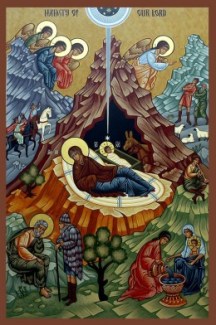
25 December is a day when Christians around the world celebrate the coming of God in the person of Jesus Christ (with the exception of the Eastern Orthodox Church, which observes Christmas on 7 January). nativity icon

However, 25 December had played a significant role in Jewish history before the advent (pun intended) of Christmas.

I am currently reading through Craig G. Bartholomew’s new book, Introducing Biblical Hermeneutics: A Comprehensive Framework for Hearing God in Scripture (Baker Academic, 2015).  I was reminded of the significance of 25 December when reading a section on the history of Judaism during the Second Temple period. Bartholomew says this (pages 162-163):

Under Syrian rule, Antiochus Epiphanes’s desecration of the temple on December 25, 167 BC, forced the issue of identity to the fore. Some refused to submit to Antiochus’s actions and died rather than submit. Others who escaped looked to Yahweh to act in a new and decisive way to vanquish his enemies. Judas Maccabeus and his companions organized a revolt and drove out Antiochus, so that three years to the day after its desecration, the temple was reconsecrated (December 25, 164 BC)…However, the ambiguity of the years that followed created the same sort of puzzle as had the “return from exile.” God had acted, but it seemed as though another great intervention must still come.

Indeed. Bartholomew does not go on to explore the significance of this in light of the date of the church’s celebration of Jesus’ coming, 25 December. First the desecration of the temple, then the reconsecration of the temple, and finally the arrival of the One who embodied in his own person what every previous temple was a mere symbol of (the book of Hebrews suggests this and much more). Jesus was God’s Temple par excellence.  “The Jews then said, ‘It has taken forty-six years to build this temple, and will you raise it up in three days?’ But he was speaking about the temple of his body.” (John 2.20-21)

Without pursuing it further here, let me suggest that we begin to think about the relation of Jesus’ birth (and the day we celebrate it) to the larger matrix of temple theology. I believe there is sufficient historical precedence for doing so.


To read or to watch (and listen)?

Tags

, , ,

Every book has a story. And many of the books that I like to read are the product of research and lectures done by various scholars over a period of time that eventually ends up becoming a book. Often, before a scholar writes a book on a topic he or she will do intense research, give presentations at conferences, teach courses, even preach sermons on the topic in order to nuance their position and fine-tune their work. Additionally these types of venues allow them the opportunity to get feed-back and critique from their peers and fellow scholars. And then, often many months later, a book is finally published with the results of all the hard work. This is the beauty of theology done in community.

With the benefit of technology nowadays we often have the opportunity to watch/hear a presentation of material that eventually finds itself in book form.

Here is an example. Revelation and the Politics of Interpretation

One of the books on my wishlist this Christmas is Revelation and the Politics of Apocalyptic Interpretation 

This book is the result of a conference at Duke University. It contains essays by scholars such as N. T. Wright, Richard B. Hays, Marianne Meye Thompson, etc. and explores the book of Revelation’s intertextual resonances with the Old Testament and its political implications.

But I recently discovered that I can watch a lecture by N. T. Wright (with response by C. Kavin Rowe) which gives the substance of what I think his essay in the book covers. So if you are thinking of buying the book, then why wait? Listen to this lecture and enjoy some of the material now!

YouTubeVideo: Revelation and Christian Hope: Political Implications of the Revelation to John

I. Howard Marshall Present with the Lord

Tags

, , ,

Yesterday, 12 December 2015, I. Howard Marshall passed from this world i-howard-marshallat the age of 81. Marshall was a conservative evangelical scholar whose work combined a high regard for the authority of Holy Scripture with a conviction that we are called to study it with the full use of our minds.
He made major contributions to many areas within New Testament studies. He published commentaries on many books of the NT, a New Testament Theology, a book on the doctrine of Inspiration, reference Bible dictionaries, works on NT interpretation methods, many articles, and the list goes on.

He has a special place in my heart because he was not just an academic scholar who stood aloof from the church. He spanned the gulf between the church and the academy. And moreover, he was a NT scholar who emphasized mission. He claimed that “New Testament theology is essentially missionary theology.” Here is the broader context of that claim:

New Testament theology is essentially missionary theology. By this I mean that the documents came into being as the result of a two-part mission, first, the mission of Jesus sent by God to inaugurate his kingdom with the blessings that it brings to people and to call people to respond to it, and then the mission of his followers called to continue his work by proclaiming him as Lord and Savior, and calling people to faith and ongoing commitment to him, as a result of which his church grows. The theology springs out of this movement and is shaped by it, and in turn the theology shapes the continuing mission of the church. The primary function of the documents is thus to testify to the gospel that is proclaimed by Jesus and his followers. Their teaching can be seen as the fuller exposition of that gospel. They are also concerned with the spiritual growth of those who are converted to the Christian faith. They show how the church should be shaped for its mission, and they deal with those problems that form obstacles to the advancement of the mission. In short, people who are called by God to be missionaries are carrying out their calling by the writing of Gospels, letters and related material. They are concerned to make converts and then to provide for their nurture, to bring new believers to birth and to nourish them to maturity.

I. Howard Marshall, New Testament Theology: Many Witnesses, One Gospel (Downers Grove, IL: InterVarsity Press, 2004), 34–35.

Here are two other tributes put out in honor of Marshall:

He will be greatly missed. May he rest in the fullness of joy!

Recent Research on the Greek of the New Testament

Tags

,

There has been a steady flow of publications of recent research on the Greek of the New Testament. A lot of work has been done particularly in the area of applying insights gained from theoretical and applied linguistics to the study of the Greek of the New Testament.

If you are looking to get up to speed on recent research in this area first two books to read should be the following:

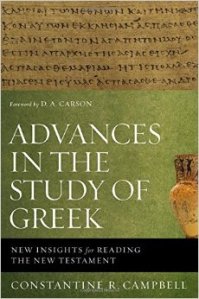
  1. Advances in the Study of Greek: New Insights for Reading the New Testament by Constantine R. Campbell (Zondervan 2015).
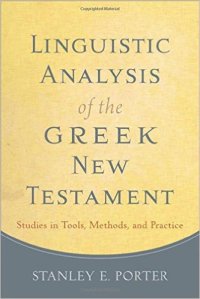
  2. Linguistic Analysis of the Greek New Testament: Studies in Tools, Methods, and Practice by Stanley E. Porter (Baker Academic 2015).

These are both intermediate level books that will get you up to speed on Greek studies.

Here are the chapter titles for Campbell’s book:Campbell_new book

  • A Short History of Greek Studies: The Nineteenth Century to the
    Present Day
  • Linguistic Theories
  • Lexical Semantics and Lexicography
  • Deponency and the Middle Voice
  • Verbal Aspect and Aktionsart
  • Idiolect, Genre, and Register
  • Discourse Analysis I: Hallidayan Approaches
  • Discourse Analysis II: Levinsohn and Runge
  • Pronunciation
  • Teaching and Learning Greek

The book is very helpfully organized. Campbell does an excellent job of boiling down the complex and confusing relationship between various schools of thought and different approaches on each topic. The book should be required reading for students studying Greek. Call me a nerd but I found it hard to put the book down I was enjoying it so much.

Porter’s book is a bit more rigorous and consequently demands a slower read. But don’t
mistake me, it is well worth it.  Porter is stronger on the theoretical side of things than he is on the application (i.e., exegesis of specific texts), in my opinion anyway. But the real strength of this book is the broad coverage of topics at the interface between linguistics and Greek studies.Porter_Linguistic Analysis

Here are the chapters:

  • Who Owns the Greek New Testament? Issues That Promote and Hinder Further Study
  • Analyzing The Computer Needs of New Testament Greek Exegesis
  • “On the Shoulders of Giants”: The Expansion and Application of the Louw-Nida Lexicon
  • Linguistics and Biblical Interpretation
  • A Multidisciplinary Approach to Exegesis
  • Sociolinguistics and New Testament Study
  • Discourse Analysis: Introduction and Core Concepts
  • The Ideational Metafunction and Register
  • Time and Aspect in New Testament Greek: A Response to K.L. McKay
  • Three Arguments regarding Aspect and Temporality: A Response to Buist Fanning, with Excursus on Aspectually Vague Verbs
  • The Perfect Tense-Form and Stative Aspect: The Meaning of Greek Perfect Tense-Form in the Greek Verbal System
  • A Register Analysis of Mark 13: Towards a Context of Situation
  • The Grammar of Obedience: Matthew 28:19-20
  • Verbal Aspect and Synoptic Relations
  • Study of John’s Gospel: New Directions or the Same Old Paths?
  • Method and Means of Analysis of the Opponents in Pauline Letters
  • 1 Timothy 2:8: Holy Hands or Holy Raising?
  • Greek Word Order: Still an Unexplored Area in New Testament Studies?
  • Proper Nouns in the New Testament
  • Hyponymy and the Trinity

Porter’s book demonstrates that those who assume Greek studies have come to a plateau, with nothing new to learn or discover, are wrong. With the tools and resources available today we are in a much better position to make advances in these areas than we were a generation ago. Most of the chapters were originally delivered at conferences (e.g., Society of Biblical Literature, Society for New Testament Studies, etc.), although none of them has been previously published. This book is a must read for anyone who desires to read the Greek New Testament with nuance and precision.

What was the motivation for the Incarnation?

Tags

, ,

incarnation anywayI recently finished an interesting read: Incarnation Anyway: Arguments for Supralapsarian Christology by Edwin Chr. van Driel (Oxford University Press, 2008). The book deals with the question of God’s motivation for the incarnation. Was it contingent upon sin, or did the triune God have a deeper motive in becoming human? As the title of the book suggests, van Driel argues for the latter. He proposes that God’s desire for intimate friendship and love with his creation has the most explanatory power for understanding the incarnation. Understanding the incarnation, in other words, as merely a divine response to sin does not do justice to the full beauty and majesty of Immanuel, God with us.


It may be important to compare and contrast this book with another of a similar strand. Van Driel comes to very similar conclusions on this topic as the traditional Greek Orthodox viewware_orthodox_way has it. For example, Kalistos Ware, in his book The Orthodox Way (St. Vladimir’s Seminary Press, 1979), says the incarnation “is God’s supreme act of deliverance, restoring us to communion with himself. But what would have happened if there had never been a fall? Would God have chosen to become man, even if man had never sinned?” (pg. 70). Following the lead of St. Isaac the Syrian (Bishop of Nineveh, late 7th century) Ware suggests that “Even had there been no fall, God in his own limitless, outgoing love would still have chosen to identify himself with his creation by becoming man” (pg. 70).

However, an important difference here is van Driel’s refusal to postulate a hypothetical scenario of unfallen humanity. Speculating about an unreal situation does not help us understand the motivation for the incarnation. Rather than engage in speculation van Driel insists that we deal directly with the situation that has in fact obtained: “I do not ask what would have happened if we had not sinned; I ask about the incarnation as it happened, about the Christ as we have him; and my point is that the incarnation gives us so much, is so rich in gifts of divine friendship and intimacy, that it cannot be explained as only a divine countermeasure against sin…the category of redemption is not rich enough to explain the wonder of his presence” (pg. 164-65).

Van Driel is not trying to minimize the importance of redemption from sin. Rather, he is trying to highlight the magnificence and majesty that is displayed in the incarnation, and suggesting that if we think of the incarnation as only a divine response to sin then we are flattening out God’s purpose in becoming human. The practical implications of this are important for 1) our spiritual walk with God, and 2) our evangelism.

If the incarnation is merely a divine countermeasure against sin, that assumes that our relationship to him is based on a problem-solution model; the fall of humanity into sin is the problem, God’s solution is redemption (via the incarnation). The problem with this model, according to van Driel, is that once the solution is obtained there is no further need for a continued relationship with the incarnate Christ. In other words, what further need is there for Christ to remain incarnate once the redemption has been accomplished? The problem (sin) has been dealt with, atonement has been made. Van Driel’s proposal is that God’s motive goes beyond a mere countermeasure for sin. God desires to be as close as possible with his creatures in love and friendship. And because this desire came before sin there is abundant reason for us to continue to engage with him daily in intimate friendship, and further, the deeper motive for Christ to remain human, even now, still stands.

The other practical implication relates to our evangelism. Van Driel suggests that to suppose the incarnation is contingent upon our need for redemption leads to the improper conclusion that before we can introduce someone to Christ we must first convince them that they are sinners, and therefore need redemption. Although, van Driel doesn’t use this analogy, I think he would say this is putting the proverbial cart before the horse. He is not saying that we are not sinners who need redemption. Rather, he is laying out a vision of the incarnation in which the love of God precedes the need of redemption, and therefore serves as a more acceptable starting point for inviting people into a living relationship with this God.

This was a fascinating read. I find myself sympathetic with the main thrust of the book. However, I can’t help but wonder if van Driel has really understood the biblical-theological significance of sin. We live in a society where moral relativism rules the day. I think it is important for us to grapple with the biblical teaching on sin and its contemporary significance. Additionally, as for the motive behind the incarnation, it is a false dichotomy to suggest that it must be either a countermeasure against sin or a step toward loving fellowship with humanity; I think the two are intricately bound up with one another. To separate them as mutually exclusive motives for the incarnation creates an unnecessary disjunction in the purpose of God. Even human beings can havefallen complex motives for action. Is it wrong to suppose God had complex motives?

In sum, I think Incarnation Anyway is worth thoughtful study, but it would be helpful to supplement with another book on the topic of sin. So read it alongside Fallen: A Theology of Sin (Crossway, 2013), an excellent  compilation of essays written by evangelical scholars (D.A. Carson, Douglas Moo, Paul House, Gerald Bray, Bryan Chapell, Sydney Page, Robert W. Yarbrough, etc.).