
• Home
  • About
  • Resources

The Cruciform Pen

~ toward a cross-shaped life

The Cruciform Pen

Tag Archives: Judaism

Paul and Second Temple Judaism

09 Saturday Apr 2016

Posted by thecruciformpen in Historical Studies, Research Topics / Book Ideas

≈ 1 Comment

Tags

Apocalyptic Interpretation, Christian Origins, Judaism, New Perspective on Paul, Pauline Theology, Second Temple Judaism
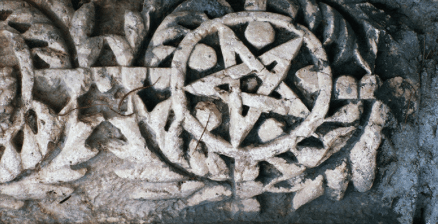
Second Temple Jewish Star

James H. Charlesworth has crafted 12 questions to guide his review of N.T. Wright’s Paul and the Faithfulness of God. The stated goal of the questions is to allow him “to classify the best approach to the very complex world of Second Temple Judaism in ancient Palestine and in the Diaspora, Paul’s relation to it, and Wright’s presentation of each.”¹

So here is my idea for how someone could use Charlesworth’s questions to write a book (publishers take note). The questions (or some modification of them) would serve as a great tool for comparing various contemporary presentations of Paul. Charlesworth himself should contribute the Foreword or Introduction so as to give him the proper credit for the questions. I propose that the following works on Paul could profitably be analyzed on the basis of Charlesworth’s questions:

  • F.F. Bruce. Paul Apostle of the Heart Set Free. Paternoster Press, 1977.
  • James D. G. Dunn. The Theology of the Apostle Paul. Eerdmans, 1998.
  • Thomas R. Schreiner. Paul, Apostle of God’s Glory in Christ: A Pauline Theology. InterVarsity Press, 2001.
  • Michael J. Gorman. Apostle of the Crucified Lord: A Theological Introduction to Paul and His Letters. Eerdmans, 2004.
  • Anthony C. Thiselton. The Living Paul: An Introduction to the Apostle’s Life and Thought. InterVarsity Press, 2009.
  • N.T. Wright. Paul and the Faithfulness of God. Fortress Press, 2013.
  • John M.G. Barclay. Paul and the Gift. Eerdmans, 2015.
  • E.P. Sanders. Paul: The Apostle’s Life, Letters, and Thought. Fortress Press, 2015.

So what are Charlesworth’s questions? (below I have replaced “Wright” with “our author” to make them applicable to other works)

  1. I am certain that [our author] would assiduously avoid any semblance of Anti-Judaism (Anti-Semitism), but would he agree with the stellar group of Pauline specialists who convened in Rome in 2014 to demonstrate how Paul now must be understood within Second Temple Judaism?
  2. Paul states that he is proud to be a Jew and a Pharisee, so does [our author] err and cast Paul as a “Christian,” sociological and theological category which is anachronistic to many experts for the period before 70 CE?
  3. Does [our author] avoid such misleading dichotomies as “Hellenistic Judaism” versus “Palestinian Judaism” and “Orthodox Judaism” versus “Sectarian Judaism”?
  4. In examining pre-70 CE sociological and theological contexts, does [our author] choose to use terms that are now relegated to the dust bin, according to most scholars, such as “canonical,” “canon,” “extra-canonical,” as well as “church,” “orthodoxy,” and “heresy”?
  5. Does [our author] appreciate how significantly the concepts and terms in the Dead Sea Scrolls have revolutionized scholars’ approach to Second Temple Judaism, Christian Origins, and Paul? And specifically, how dies he use the evidence of “works of law” now found in Second Temple  Judaism to clarify the same term in Galatians?
  6. If [our author] sees a unity within Second Temple Judaism, what is it and how does he obtain that insight; and if he sees only diversity, how does he explain the colossal change in 66 CE?
  7. Does [our author] appreciate the many groups and sects within Second Temple Judaism and does he do justice to the Samaritans?
  8. How does [our author] treat the “sacred writings” in the Old Testament Pseudepigrapha (that is, does he find God’s Word in any of them, as did the early Jews and “Christians”?); and does he engage the authors who have claimed Paul quoted from or at least knew one or more these documents?
  9. Does [our author] perceive that Paul’s main inheritance from Judaism is apocalyptic eschatology?
  10. Would [our author] agree with those that conclude Paul broke from Jesus by rejecting the purity laws, dietary restrictions, circumcision, and taking the “good news” to Gentiles?
  11. Has [our author] found “the heart of Paul’s theology” or has he allowed Paul to be as contradictory as he seems to be in his authentic letters?
  12. Where do we find Paul’s genius and creativity and how do we know that when so many ideas we all once concluded had originated with Paul are now being discovered in early Jewish texts?

Some of the questions may need to be reformulated. Charlesworth’s own presuppositions are apparent in more than one. Nevertheless, they do serve as launch point for further discussion of how different authors handle the issues concerned. I think it would be quite revealing to consider how each of the above mentioned works on Paul deals with each of these topics. It will go a long way toward demonstrating the relative strengths and weaknesses of each work. Further, it would potentially uncover additional areas where more work is needed.

So…will someone please take this idea and run with it?


¹ See “Wright’s Paradigm of Early Jewish Thought: Avoidance of Anachronisms?” in God and the Faithfulness of Paul (Mohr Siebeck 2016) edited by Christoph Heilig, J. Thomas Hewitt, and Michael F. Bird, 207-234, 207.

‘Christ’: a Name, a Title or an Honorific? [New Book Notices]

06 Sunday Sep 2015

Posted by thecruciformpen in Resources

≈ Leave a comment

Tags

Christ, Judaism, Kingship, Messiah, Paul's Epistles, Pauline Theology, Pistis Christou

So what do you think? Is ‘Christ’ a name (i.e., a surname)? Perhaps a title (e.g., ‘King of Spain’)? Or what about an honorific (cf. ‘Augustus,’ which was given to the first century emperor Julius Caesar, who later became known simply as ‘Caesar Augustus’)?

For most of us the difference between these are not immediately obvious. However, there is a difference in meaning. And it is important that we try to understand the exact nuance that the word ‘Christ’ had for the writers of the New Testament.

Matthew Novenson

Matthew V. Novenson, Lecturer in New Testament and Christian Origins at the University of Edinburgh, has recently written an excellent book on this question. His thesis is surprisingly simple, yet with profound implications: Χριστος (Christos) in Paul’s letters means ‘Messiah.’ In other words, it is neither a name nor merely a title. It carries with it the nuances involved with “messiah language in ancient Judaism” (Novenson, pg. 3).

Here is a link to his book: Christ among the Messiahs: Christ Language in Paul and Messiah Language in Ancient Judaism

Christ among messiahs

Here is what N. T. Wright has said about it: “Novenson’s work now sets a new standard for discussion of Christos in particular, demonstrating that the way it functions linguistically, within the larger world of Greek usage in late antiquity, fits extremely well with royal ‘honorifics’ and not at all with proper names” (Paul and the Faithfulness of God, pg. 824).

On another front, Joshua W. Jipp, over at Trinity Evangelical Divinity School, is coming out with a new book on this topic soon. His position will bolster that of Novenson. “In the process, Jipp offers new and noteworthy solutions to outstanding questions concerning Christ and the law, the pistis Christou debate, and Paul’s participatory language” (from the blurb on the Fortress Press website)

Here is a link to his book: Christ is King: Paul’s Royal Ideology

Joshua Jipp_Christ is King

Here is a sample from the table of contents:

  1. Paul’s Christ-Discourse as Ancient Kingship Discourse
  2. King and Law: Christ the King as Living Law
  3. King and Praise: Hymns as Royal Encomia to Christ the King
  4. King and Kingdom: Sharing in the Rule of Christ the King
  5. King and Justice: God’s Righteousness and the Righteous King in Romans
  6. Conclusion

Categories

  • Biblical Studies (20)
  • Historical Studies (12)
  • People to Know (27)
  • Poetry (2)
  • Prayers (7)
  • Research Topics / Book Ideas (3)
  • Resources (52)
  • Reviews (24)

Posts

  • February 2023 (1)
  • September 2022 (1)
  • October 2020 (1)
  • February 2020 (1)
  • December 2019 (1)
  • August 2019 (1)
  • February 2019 (3)
  • December 2018 (1)
  • June 2018 (1)
  • May 2018 (2)
  • March 2018 (6)
  • January 2018 (1)
  • November 2017 (1)
  • October 2017 (1)
  • May 2016 (4)
  • April 2016 (3)
  • March 2016 (10)
  • February 2016 (1)
  • January 2016 (4)
  • December 2015 (5)
  • October 2015 (1)
  • September 2015 (6)
  • February 2015 (1)
  • January 2015 (6)
  • December 2014 (12)
  • November 2014 (8)
  • October 2014 (1)

Enter your email address to follow this blog and receive notifications of new posts by email.

Join 46 other subscribers

Currently Reading

Blogs I Follow

  • Malcolm Guite
  • The Cruciform Pen
  • βιβλιοσκώληξ
  • Holy Writ & Sacred Witness
  • Griffin Paul Jackson
  • Koine-Greek
  • Biblical Studies
  • Bible Design Blog
  • Theological Studies
  • καὶ τὰ λοιπά
  • Euangelion
  • Evangelical Textual Criticism
  • NT Blog

Blog at WordPress.com.

Malcolm Guite

Blog for poet and singer-songwriter Malcolm Guite

The Cruciform Pen

toward a cross-shaped life

βιβλιοσκώληξ

βιβλιο: "book"; σκώληξ: "worm"

Holy Writ & Sacred Witness

...eyes on the Word; ears to the ground...

Griffin Paul Jackson

Word architect.

Koine-Greek

Studies in Greek Language & Linguistics

Biblical Studies

Bible Design Blog

Theological Studies

An Internet Resource for Studying Christian Theology

καὶ τὰ λοιπά

A blog by Daniel R. Streett all about Early Judaism, Biblical Studies, Koine Greek, καὶ τὰ λοιπά

Euangelion

toward a cross-shaped life

Evangelical Textual Criticism

toward a cross-shaped life

NT Blog

toward a cross-shaped life

  • Subscribe Subscribed
    • The Cruciform Pen
    • Join 46 other subscribers
    • Already have a WordPress.com account? Log in now.
    • The Cruciform Pen
    • Subscribe Subscribed
    • Sign up
    • Log in
    • Report this content
    • View site in Reader
    • Manage subscriptions
    • Collapse this bar
 

Loading Comments...