• Home
  • About
  • Resources

The Cruciform Pen

~ toward a cross-shaped life

The Cruciform Pen

Author Archives: thecruciformpen

Theology Conference in Chicago

04 Sunday Jan 2015

Posted by thecruciformpen in Resources

≈ Leave a comment

Theology Conference

The EFCA is putting on a Theology conference at Trinity International University this month (28 Jan – 30 Jan). Its theme is THE DOCTRINE OF THE SCRIPTURES. 

Keynote Speakers

  • D. A. Carson
  • Graham Cole
  • Dan Doriani
  • V. Philips Long
  • David Luy
  • Tom McCall
  • Douglas Moo
  • Kevin Vanhoozer
  • John Woodbridge

Schedule, Registration, and Papers

For a schedule of speakers along with the papers they presenting see here.

To register for the conference see here.

Some Reflections on Richard B. Hays’ New Book

03 Saturday Jan 2015

Posted by thecruciformpen in Reviews

≈ Leave a comment

Tags

Gospels, Richard B. Hays

reading backwards

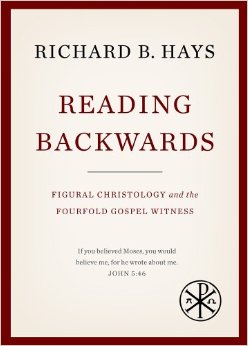
Richard B. Hays’ new book, Reading Backwards: Figural Christology and the Fourfold Gospel Witness, is a short read but there is a lot to digest in its 109 pages. Each of the four Gospels is given a chapter. In this post I will limit my reflections to his chapter on the Gospel of Mark.

By way of review about the book in general, in the preface Hays states clearly that the book is an

account of the narrative representation of the identity of Jesus in the canonical Gospels, with particular attention to the ways in which the four Evangelists reread Israel’s Scripture, as well as the ways in which Israel’s Scripture prefigures and illuminates the central character in the Gospel stories.

For Hays, the concept of ‘mystery’ is essential for understanding how Mark crafts his narrative around the person of Jesus. He points out that Mark is generally more cryptic and allusive than Matthew (who much more often states explicitly “This took place to fulfill what had been spoken through the prophet , saying…”). Mark’s strategy of indirect reference and subtle allusions to the Old Testament cautions us against speaking too quickly about the mysterious identity of the Carpenter from Nazareth. In other words, there is something crudely wrong with stating so blatantly and matter-of-factly that “Jesus is the God of Israel.” Such a brash declaration fails to do justice to the transcendence and profoundness of the truth contained in the affirmation. And some might even say that kind of statement oversimplifies an incredibly complex identity; Hays quotes Rowan Williams, “There is a kind of truth which, when it is said, becomes untrue” (31). The point is that the identity of Jesus cannot be boiled down into such an unqualified two-dimensional statement. Instead, Mark chooses to drop dynamic hints about the identity of Jesus by way of careful selection of stories (and careful telling of those stories), hints that leave the reader to silently ponder who this Jesus was, drawing his categories from the Old Testament.

Here is how Hays concludes his interpretation of Mark’s figural Christology (an interpretation which he notes is not far from the way Mark’s Gospel is read in the Orthodox tradition):

So, if we seek to read Scripture through Mark’s eyes, what will we find? We will find ourselves drawn into the contemplation of a paradoxical revelation that shatters our categories and exceeds our understanding. We will learn to stand before the mystery in silence, to acknowledge the limitation of our understanding, and to wonder. The ‘meaning’ if Mark’s portrayal of the identity of Jesus cannot be rightly stated in flat propositional language; instead, it can be disclosed only gradually in the form of narrative, through hints and allusions that project the story of Jesus onto the background of Israel’s story. As Mark superimposes the two stories on one another, remarkable new patterns emerge, patterns that lead us into a truth too overwhelming to be approached in any other way.

I do have some questions about how Hays establishes an Old Testament allusion. As one example, at times Hays seems to rest his reading of the OT allusion on the repetition of a couple key phrases (and perhaps also thematic similarity?). I want to ask, is the repetition of phrases enough to establish an admittedly cryptic allusion? It would be nice if more evidence could be adduced to demonstrate the presence of an allusion.

Notwithstanding my unanswered questions, I deeply appreciate this kind of reading of Mark’s gospel. As a footnote, I think it provides a convincing explanation of the shorter (in my opinion, genuine) ending of Mark. If the shorter ending is original, then Mark ends his gospel with this authorial comment: “Trembling and bewildered, the women went out and fled from the tomb. They said nothing to anyone, because they were afraid” (Mark 16:8). This mysterious concluding statement has generated a history of complex textual emendations and additions by scribes in the centuries to follow Mark’s writing. Why would Mark end his gospel in such an unexpected way? Well, if Hays’ reading is correct then it should not be so unexpected after all. Mark has been preparing his readers for this kind of reaction all along. As Hays puts it,

readers who listen carefully to the resonances of Israel’s Scripture in Mark’s Gospel and then see how the story drives toward the passion narrative may find themselves, like the women in Mark’s artful dramatic ending, reduced, at least for a time, to silence…The fear of the women is, of course, a response to the message of the resurrection of Jesus the Crucified One. I would suggest that a similar response of reticent fear and trembling is equally appropriate when we read the story of the crucifixion, if we have rightly followed Mark’s narrative clues about the identity of the one on the cross.

To this I simply offer a hearty AMEN and AMEN!

A Day Sanctified

02 Friday Jan 2015

Posted by thecruciformpen in Reviews

≈ Leave a comment

Tags

Jürgen Moltman, Sabbath

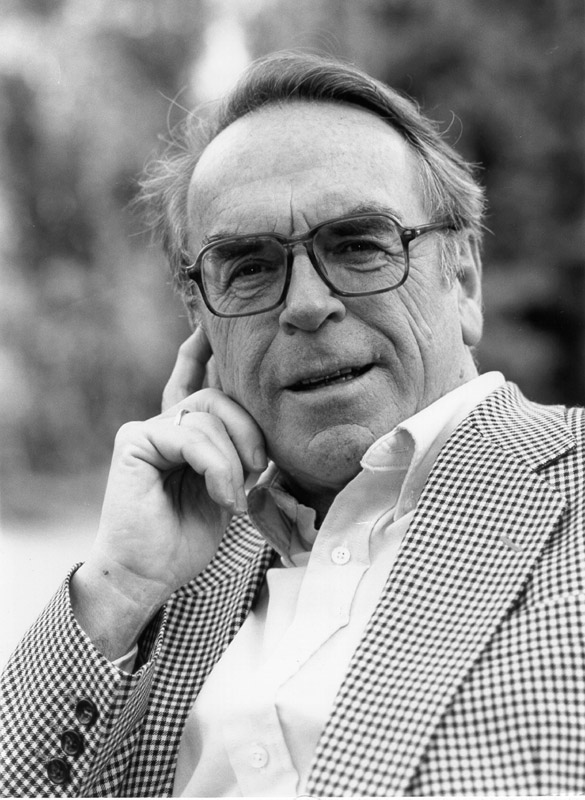
moltmannI just read an article that made me think of the Sabbath in a way that I have not thought of before. Jürgen Moltmann (“The Sabbath: The Feast Of Creation.” Journal Of Family Ministry 14.4 [2000]: 38-43) talks about the nature of the Sabbath in some pretty profound ways. I’ll just share a few thoughts worth pausing over. First, he notes that in the Genesis account God’s blessing of the Sabbath is unique because previously God had blessed only things. For example, God blesses the sea creatures and birds of the air (1:22) and he also blesses the man and woman (1:28). But when he blesses the Sabbath (2:3) he is not blessing a thing but rather a day, that is, a time. “God does not bless this day through activity, but rather through his rest; not by creating, but rather by being there. In this day God is wholly present” (40). Commenting on Augustine’s famous dictum, ‘our heart is restless in us until it finds rest in thee’, Moltmann points out that restlessness is universal among mortal creatures. So where is the refuge? the place of rest? “It is in time–here and now–on the seventh day, God’s Sabbath. On this day God simply is. All creatures therefore find there place…in the calm of God’s presence” (40). So, because on the Sabbath God blessed a time and not a thing this means that in a sense his blessing is universally available to all creatures who exist in this time, that is, the Sabbath.

And yet, as a spacio-temporal blessing the Sabbath points forward and backward, according to Moltmann. It points backward because it beckons us to remember creation (the day of blessing from the Creator). It points forward because on the Sabbath (in a uniquely blessed way) we may experience life in the presence of the Living God. I’ll close with a quote in which Moltmann makes an interesting analogy between the Sabbath day and the function of temples in the ancient world:

In the limited temples of the peoples, heaven and earth touch, but in the Jewish Sabbath, time and eternity touch. That way the Sabbath is both a day of remembrance of the original creation and a day of hope in our final salvation. Beginning and End are present on this day, interrupting time and indeed rescinding it. On this day death is abolished, for life is experienced so deeply that it is eternal. On this day the law of time is put away, for God himself lives in this day: eternal presence in an instant of time.

A Prayer for the New Year

31 Wednesday Dec 2014

Posted by thecruciformpen in Prayers

≈ Leave a comment

My wife just wrote a confession for the worship service at our church this Sunday. I was encouraged by her prayer for the new year and wanted to pass it along. May God hear this prayer and make all things new in 2015!

We come to you in this new year beaten and battered by the year just passed.

Help us to trust you to heal our wounds and use our sorrows.

We come to you in this new year eager to put you first in all we do.

Forgive us Lord for our failings of last year.

We come to you in this new year full of personal resolutions and self-centered goals.

Help us to trust you to make us more like your Son Jesus.

We come to you in this new year with small hopes and undersized expectations.

Forgive our faith for being so small.

We pray this in the name of the One who makes all things new, Amen.

The Incarnation and Limited Atonement

29 Monday Dec 2014

Posted by thecruciformpen in Reviews

≈ Leave a comment

Tags

Covenant Theology, James B. Torrance, Limited Atonement

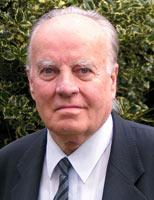
I recently read an article by James B. Torrance titled “The Incarnation and ‘Limited RevProfJamesBTorranceAtonement'” [Evangelical Quarterly 55 (1983): 83-94]. Torrance takes a position against the doctrine of ‘limited atonement’ as he understands it. While I remain finally unpersuaded concerning his arguments against limited atonement, there was still a lot of good stuff in his article. Here are my two main take-aways: (1) He has an excellent discussion about the consequences of starting with the doctrine of the incarnation vs. the doctrine of election, and the divergent implications this starting point has for how we construct our doctrine of God. (2) Regarding historical theology there is a fascinating sketch of the emerging of “so-called ‘federal Calvinism’ or Covenant Theology which was to develop in England, Scotland, and Holland” (see pgs. 88-93).

Free $20 Gift for Logos Bible Software Books

24 Wednesday Dec 2014

Posted by thecruciformpen in Resources

≈ 1 Comment

Tags

Discounts

Logos.com is giving a free $20 off for purchases until Dec 31. Use this discount code at checkout: FAITHLIFE-GIFT to save $20 on any single order.

I got the two following books for free because they were both under $20 on sale!

  • R. Norman Whybray’s Reading the Psalms as a Book
  • T. F. Torrance’s Space, Time and Incarnation  

reading-the-psalms-as-a-bookspace time incarnation

Satan: God’s Servant

18 Thursday Dec 2014

Posted by thecruciformpen in Reviews

≈ Leave a comment

Tags

Biblical Theology, Canon, Old Testament Theology, Satan, Sydney Page

Satan

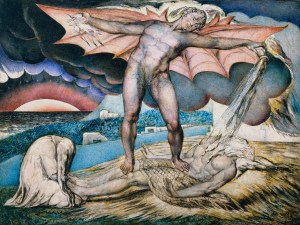
Sydney Page has a fascinating article about Satan [“Satan: God’s Servant.” Journal Of The Evangelical Theological Society 50.3 (2007): 449-465]. More specifically, it is about the biblical portrayal of the Satan figure. More often than  not, our thinking about angelic beings and mysterious figures like Satan is shaped more by popular imagination, movies, and artwork (like William Blake’s historical piece above). Page has gifted the church with a sound biblical basis for thinking about Satan.

In the article he studies the story of Job (and Satan’s role in the Job account). He demonstrates convincingly how “the Joban conception of Satan exercised significant influence on the rest of the biblical canon…how Satan is portrayed as a servant of God in Job, then…how later biblical texts pick up and use the Joban ideas” (449). Here is a great example how later biblical texts can echo earlier ones. And conversely, how earlier biblical texts can affect later ones. (Similar to Richard B. Hays’ project on the Gospels and also Paul)

The motif that Page finds recurring in various forms in the developing biblical tradition around the Satan figure has to do with Satan’s inimical subordination to God: “Although there is incontrovertible evidence of change and development in the concept of Satan in the biblical literature, this basic notion that Satan is under divine control appears repeatedly” (465). This has significant implications for our doctrine of God and the age old questions of theodicy.

One of the take-aways from the article relates to how we speak about Satan: “One must, therefore, be careful to avoid exaggerating the power of Satan and setting up a dichotomy between God and Satan that would suggest a particular action must be attributed to either one or the other. These alternatives are not mutually exclusive. Satan is God’s adversary, but whatever he does falls under the overarching sovereignty of God” (465).

Lectures by Richard B. Hays

16 Tuesday Dec 2014

Posted by thecruciformpen in Resources

≈ Leave a comment

Tags

Biblical Theology, Gospels, Lectures, Richard B. Hays

043910_hays_richard_hirez

A friend of mine pointed me to the following lectures by Richard B. Hays. If you are considering buying his newest book Reading Backwards: Figural Christology and the Fourfold Gospel Witness these lectures cover the same material:

  1. Can the Gospels Teach Us How to Read the Old Testament?
  2. Torah Reconfigured: Reading Scripture with Matthew
  3. Turning the World Upside Down: Reading Scripture with Luke
  4. The Temple of His Body: Reading Scripture with John
  5. Opening Our Minds to Understand the Scriptures

Here is a quote from his Reading Backwards (page 4) that summarizes nicely is thesis in these lectures:

I want to suggest to you that we learn to read Scripture rightly only if our minds and imaginations are opened by seeing the scriptural text–and therefore the world–through the Evangelists’ eyes. In order to explore that hermeneutical possibility, we must give close consideration to the revisionary figural ways that the four Gospel writers actually read Israel’s Scripture…Here is a preliminary preview of what we will find as we pursue our exploration: the Gospels teach us how to read the OT, and–as the same time–the OT teaches us how to read the Gospels. Or, to put it a little differently, we learn to read the OT by reading backwards from the Gospels, and–at the same time–we learn how to read the Gospels by reading forwards from the OT.

Learning How to Read Backwards…

14 Sunday Dec 2014

Posted by thecruciformpen in People to Know

≈ Leave a comment

Tags

Richard B. Hays

I just received Richard B. Hays’ new book, Reading Backwards: Figural Christology and the Fourfold Gospel Witness. 

reading backwards

The book is basically what he delivered as the Hulsean Lectures in the Faculty of Divinity at Cambridge University 2013-2014. Excited to read it! Review to come soon!

I am thankful for William Tyndale

10 Wednesday Dec 2014

Posted by thecruciformpen in People to Know

≈ Leave a comment

Tags

English Versions, William Tyndale

William_Tyndale

It is hard to overstate the significance of the work of William Tyndale in translating the Bile into English for the first time from Greek and Hebrew. In my opinion, the best biography out there on him is by David Daniell and it focuses on Tyndale as a translator. I highly recommend it!

In the introduction to his biography David Daniell writes the following:

William Tyndale gave us our English Bible. The sages assembled by King James to prepare the Authorized Version of 1611, so often praised for unlikely inspiration, took over Tyndale’s work. Nine-tenths of the Authorized Version’s New Testament is Tyndale’s. The same is true of the first half of the Old Testament, which is as far as he was able to get before he was executed outside Brussels in 1536

English phrases from Scripture for which we have Tyndale to thank (i.e., phrases which he coined and that went through to the Authorized Version and became deeply embedded within the English language):

  • ‘And they heard the voice of the Lord God as he walked in the garden in the cool of the day’ (Genesis)  [Daniell 3]
  • ‘God forbid’ (Paul’s μὴ γένοιτο in Romans) [Daniell 141]
  • ‘And all that heard it wondered, at those things which were told them of the shepherds. But Mary kept all those sayings, and pondered them in her heart’ (Luke 2) [Daniell 135]
  • ‘Finally, my brethren be strong in the Lord, and the power of his might’ (Ephesians 6) [Daniell 139]
  • ‘The signs of the times,’
  • ‘the spirit is willing,’
  • ‘Live and move and have our being,’
  • ‘fight the good fight’ [Daniell 142]
  • ‘the salt of the earth,’
  • ‘let there be light,’
  • ‘this thy brother was dead, and is alive again: and was lost and is found’
  • ‘there were shepherds abiding in the field’ [Daniell 1]

Tyndale invented some words that have remained in English usage till this day (‘scapegoat’  for example). But perhaps some of his most earthshaking work as a translator was not in inventing new words, but in providing new translations of old words.

Here are some significant and load-bearing words (i.e., words that carried a lot of freight in the pre-reformation church) and how Tyndale translated them:

  • πρεσβύτερος- ‘senior’ / ‘elder’ NOT ‘priest’
  • ἐκκλησία- ‘congregation’ NOT ‘church’
  • μετανοέω- ‘repent’ NOT ‘do penance’
  • ἐξομολογέω- ‘acknowledge’ NOT ‘confess’
  • ἀγάπη- ‘love’ NOT ‘charity’

It is hard to appreciate the revolutionary and subversive nature of these particular words translated this way because we do not live under the immense burden of the mediaeval church. Tyndale’s choice in translating these words avoided the weighty connotations of words like ‘priest,’ ‘church,’ ‘do penance,’ ‘confess,’ and ‘charity.’ As David Daniell says, “he is making the New Testament refer inwardly to itself, as he instructs his readers to do, and not outwardly to the enormous secondary construction of late-mediaeval practices of the Church: priests and penance and confession and charity…He cannot possibly have been unaware that those words in particular undercut the entire sacramental structure of the thousand-year Church throughout Europe, Asia, and north Africa” [148-149].

I thank God for men like William Tyndale.

← Older posts
Newer posts →

Categories

  • Biblical Studies (20)
  • Historical Studies (12)
  • People to Know (27)
  • Poetry (2)
  • Prayers (7)
  • Research Topics / Book Ideas (3)
  • Resources (52)
  • Reviews (24)

Posts

  • February 2023 (1)
  • September 2022 (1)
  • October 2020 (1)
  • February 2020 (1)
  • December 2019 (1)
  • August 2019 (1)
  • February 2019 (3)
  • December 2018 (1)
  • June 2018 (1)
  • May 2018 (2)
  • March 2018 (6)
  • January 2018 (1)
  • November 2017 (1)
  • October 2017 (1)
  • May 2016 (4)
  • April 2016 (3)
  • March 2016 (10)
  • February 2016 (1)
  • January 2016 (4)
  • December 2015 (5)
  • October 2015 (1)
  • September 2015 (6)
  • February 2015 (1)
  • January 2015 (6)
  • December 2014 (12)
  • November 2014 (8)
  • October 2014 (1)

Enter your email address to follow this blog and receive notifications of new posts by email.

Join 46 other subscribers

Currently Reading

Blogs I Follow

  • Malcolm Guite
  • The Cruciform Pen
  • βιβλιοσκώληξ
  • Holy Writ & Sacred Witness
  • Griffin Paul Jackson
  • Koine-Greek
  • Biblical Studies
  • Bible Design Blog
  • Theological Studies
  • καὶ τὰ λοιπά
  • Euangelion
  • Evangelical Textual Criticism
  • NT Blog

Blog at WordPress.com.

Malcolm Guite

Blog for poet and singer-songwriter Malcolm Guite

The Cruciform Pen

toward a cross-shaped life

βιβλιοσκώληξ

βιβλιο: "book"; σκώληξ: "worm"

Holy Writ & Sacred Witness

...eyes on the Word; ears to the ground...

Griffin Paul Jackson

Word architect.

Koine-Greek

Studies in Greek Language & Linguistics

Biblical Studies

Bible Design Blog

Theological Studies

An Internet Resource for Studying Christian Theology

καὶ τὰ λοιπά

A blog by Daniel R. Streett all about Early Judaism, Biblical Studies, Koine Greek, καὶ τὰ λοιπά

Euangelion

toward a cross-shaped life

Evangelical Textual Criticism

toward a cross-shaped life

NT Blog

toward a cross-shaped life

  • Subscribe Subscribed
    • The Cruciform Pen
    • Join 46 other subscribers
    • Already have a WordPress.com account? Log in now.
    • The Cruciform Pen
    • Subscribe Subscribed
    • Sign up
    • Log in
    • Report this content
    • View site in Reader
    • Manage subscriptions
    • Collapse this bar
 

Loading Comments...