• Home
  • About
  • Resources

The Cruciform Pen

~ toward a cross-shaped life

The Cruciform Pen

Author Archives: thecruciformpen

B. B. Warfield Website

09 Tuesday Dec 2014

Posted by thecruciformpen in Resources

≈ 2 Comments

Tags

B.B. Warfield, Bibliography

I just stumbled upon a website dedicated to The Life and Works of Benjamin Breckinridge Warfield. There should definitely be more websites like this one. Hats off to whoever took the time to create it.

The cool thing is that it has a great bibliography on Warfield and lists all of his published and unpublished works (e.g., books, booklets, articles, sermons and addresses)!

warfield

Two Important Works on Emotions

09 Tuesday Dec 2014

Posted by thecruciformpen in Reviews

≈ Leave a comment

Tags

B.B. Warfield, Emotions, Gerald Peterman

In 2013, Gerald W. Peterman wrote a book called Joy and Tears. The subtitle of the book,The Emotional Life of The Christian, is suggestive in light of another work on a similar topic. B. B. Warfield once wrote an excellent essay titled “On The Emotional Life of Our Lord” in which he articulates a conception of the emotional life of Jesus grounded on the specific emotions ascribed to him in the gospel narratives. Warfield’s essay sought to bring clarity to the church’s conception of the emotions of Jesus; in the samejoy-and-tears-cover way, Peterman’s book brings great clarity to how we think about our own emotions in light of the emotions of Jesus. The two works really belong together on multiple levels. The latter is a corollary of the former. Actually, it seems as though Peterman’s book functions as a sequel to / continuation of Warfield’s study.

  • Warfield’s essay was published as a chapter in Biblical and Theological Studies and is available on Amazon and also Logos Bible Software.
  • Joy and Tears is available on Amazon. Below is a short review of what’s inside.

Peterman has taken a topic that is notoriously difficult to understand and made it accessible for the rest of us. The book is filled with incredibly insightful explanations. In almost every chapter I experienced an aha moment. The book has a very personal feel to it. A book on emotions would be very hard to plow through for the average reader if it were overly academic and scholastic. But Peterman has done a great job of keeping close to the needs of the averagereader. He addresses issues and questions that we are actually asking (as opposed to theoretical speculation)! And most importantly (for me anyway) he gives plenty of examples and illustrations, often from his own life. This was extremely helpful for thinking of specific manifestations of otherwise abstract ideas. For example, when I began each chapter discussing the various emotions I expected to skim through them quickly, thinking myself to be relatively “neutral” on most of them. But   Peterman’s examples helped me to realize just how many ways they manifest themselves. The book is thoroughly biblical, constantly directing our thoughts to Scripture to guide us in our thinking about emotions. This is important because there are many popular misconceptions about emotions (and Peterman goes to Scripture to correct them!). Particularly fascinating and insightful is the idea that Jesus’ display of emotions was sinless and therefore it’s a good thing for us to imitate them (e.g., joy, anger, grief, sadness, etc.). I only have one minor critique of the book: the suggestions for further reading at the end of each chapter are surprisingly small. I would’ve loved to have more suggestions to dig deeper.

On Controlling Our Borders

05 Friday Dec 2014

Posted by thecruciformpen in Prayers

≈ Leave a comment

Tags

Immigration, prayers, Walter Brueggemann

There is a lot on the news about immigration reform lately. So I thought this prayer from Walter Brueggemann, On Controlling Our Borders, was fitting (and challenging):

Jesus–crucified and risen–draws us into his presence again, 

The one who had nowhere to lay his head,
no safe place,
no secure home,
no passport or visa,
no certified citizenship. 
We gather around him in our safety, security, and well-being, and fret about “illegal immigrants”.
We fret because they are not like us and refuse our language. We worry that there are so many of them and there crossings do not stop. We are unsettled because it is our tax dollars that sustain them and provide services. We feel the hype about closing borders and heavy fines, because we imagine that our life is under threat.
And yet, as you know very well, we, all of us–early or late–are immigrants from elsewhere;
we are glad for cheap labor and seasonal workers to do tomatoes and apples and oranges to our savoring delight. And beyond that, even while we are beset by fears and aware of pragmatic costs, we know very well that you are the God who welcomes strangers, who loves aliens and protects sojourners. 
As always, we feel the tension in the slippage between the deeper truth of our faith and the easier settlements of our society.
You do not ask for an easy way out, but for courage and honesty and faithfulness. Give us ease in the presence of those unlike us; give us generosity amid demands of those in need, help us to honor those who trespass as you forgive our trespasses.
You are the God of all forgiveness. By your gracious forgiveness transpose us into agents of your will, that our habits and inclinations may more closely follow your majestic lead, that our lives may joyously conform to your vision of the new world. 
We pray in the name of your holy Son, even Jesus.

The Criteria of Canonicity

04 Thursday Dec 2014

Posted by thecruciformpen in Reviews

≈ Leave a comment

Tags

Canon, F.F. Bruce

1258_w185

F. F. Bruce has written a classic work on the Canon of Scripture. His concern is not so much the theological question of the canon but rather the historical question. While some would argue that the theological and the historical should not be separated, Bruce still has a lot of insight and is a reliable historian nontheless (his other historical works are good too: Israel and the Nations: The History of Israel from the Exodus to the Fall of the Second Temple and New Testament History).

One of the interesting features of The Canon of Scripture is the chapter on criteria of canonicity. Here are the ‘criteria’ he discusses:

  1. Apostolic Authority
  2. Antiquity
  3. Orthodoxy
  4. Catholicity
  5. Traditional Use
  6. Inspiration

By “criteria” Bruce does not mean to imply that there was some kind of universally agreed upon set of rules that people used to pick which books would part of the Bible. Rather he seems to be thinking of something more dynamic, organic even. Principles that were operative in different situations at different times, in the ruff & tumble of everyday living. Bruce himself qualifies, “The earliest Christians did not trouble themselves about criteria of canonicity; they would not have understood the expression” (page 255). Instead, what he describes is the process of the Spirit of God guiding and shaping the believers’ thinking as they attempted to be faithful to what had been entrusted to them.

Although The Canon of Scripture should not be the only book you read on the canon, it should definitely be one of the first.

Carson’s Lectures on the Book of Revelation

03 Wednesday Dec 2014

Posted by thecruciformpen in Resources

≈ Leave a comment

Tags

D. A. Carson

Here are 26 lectures by D. A. Carson on the book of Revelation. They are super helpful for understanding this often confusing book. If you are wondering, I believe he takes an historic premillennial view. But there is great discussion about other views as well. Every Christian should listen to these lectures at least once!

Karl Barth’s Church Dogmatics on Sale

30 Sunday Nov 2014

Posted by thecruciformpen in Resources

≈ Leave a comment

Back Camera

Christianbook.com is having a holiday sale until December 8th.

Right now you can get Karl Barth’s entire 14 volume Church Dogmatics for just $99.99! And you can get free shipping with the promotion code 445265. That’s a great deal.

Here is what Logos Bible Software has to say about Barth’s Church Dogmatics:

Karl Barth, who lived from 1886–1968, was perhaps the most influential theologian of the twentieth century. Church Dogmatics, Barth’s monumental life-work that consists of more than 6 million words, was written over the span of 35 years. In it, Barth covers in depth the great doctrines of the Word of God, God, Creation and Reconciliation. He made it his task “to take all that has been said before and to think it through once more and freshly to articulate it anew as a theology of the grace of God in Jesus Christ.”

If you have an interest in theology, you should own Barth. Barth’s dogmatic theology is loaded with engaging and provocative ideas, which will challenge you for years to come. Two characteristics that define Barth’s theology are his emphasis on the person of Christ (Barth “works from Christ outward”) and his insistence that ethics and theology cannot be separated. Barth taught that “theology is ethics,” since knowing God entails doing his will.

Barth’s theology was shaped by his experience of living and teaching in Germany during the rise of Nazism. By 1934, Barth had become a leader in the Confessing Church movement, which stood in courageous opposition to Nazism at a time when the German Protestant church had largely endorsed National Socialism. This stand cost him his professorship at Bonn University and he was forced to flee the country in 1935.

Barth has been called neo-orthodox, evangelical, and Reformed. Indeed, his views developed remarkably over his lifetime as he moved from a liberal position to one of dialectical theology (theology founded on paradoxes or tensions). Later in life, Barth abandoned the views of Friedrich Schleiermacher, Rudolf Bultmann, and the liberal tradition. He argued that God was not made in man’s image but is instead “Wholly Other.”

Barth is probably best described as “ecumenical” since his work is read by Protestants and Roman Catholics, mainstream and evangelicals. Indeed, Barth was described by Pope Pius XII as the most important theologian since Thomas Aquinas, and his work continues to be a major influence on students, scholars and preachers today.

Structural Ambiguity in John 3:15

28 Friday Nov 2014

Posted by thecruciformpen in Biblical Studies

≈ Leave a comment

Tags

English Versions, Syntax

Structural ambiguity exists “when a given word or phrase…can be taken as modifying any one of two (or more) different constituents” (Radford 66). It is not uncommon for languages to exhibit structural ambiguity. For example, in the sentence “The police will shoot terrorists with rifles” (Radford 106), the prepositional phrase with rifles could be understood in two different ways:

  1. modifying the verb shoot (in which case the police are the ones with rifles)
  2. modifying the noun terrorists (in which case the terrorists are the ones with rifles)

In the Gospel of John there is an interesting case of structural ambiguity involving the prepositional phrase ἐν αὐτῷ (“in him”). Here is the clause as it is in Greek: ἵνα πᾶς ὁ πιστεύων ἐν αὐτῷ ἔχῃ ζωὴν αἰώνιον (John 3:15). Does “in him” modify the preceding participle πιστεύων? Or does it modify some part of the following phrase ἔχῃ ζωὴν αἰώνιον?

"Believe in him" or "eternal life in him"?

Greek syntax allows for both options. And both options are represented in various English translations:

NIV (1984) “that everyone who believes in him may have eternal life”

NIV (2011) “that everyone who believes may have eternal life in him“

ESV “that whoever believes in him may have eternal life”

NCV “So that everyone who believes can have eternal life in him“

NLT “so that everyone who believes in him will have eternal life”

NLT (margin) “everyone who believes will have eternal life in him“

NASB “so that whoever believes will in Him have eternal life”

NASB (margin) “believes in Him will have eternal life”

KJV “That whosoever believeth in him should not perish, but have eternal life”

So which is correct? Although both are true doctrinally, a closer look at how John uses believing-in-him language elsewhere tips the scales in one direction.

A search on my Logos Bible Software turned up the following verses for the lemma πιστεύω within 3 words of the prepositional phrase ἐν αὐτῷ in the Gospel of John. Notice the first hit is the verse under consideration, while the second hit is actually a false hit because the prepositional phrase is actually part of the previous clause and does not modify πιστεύω.

John 3:15 ἵνα πᾶς ὁ πιστεύων ἐν αὐτῷ ἔχῃ ζωὴν αἰώνιον.

1 John 5:10 ὁ πιστεύων εἰς τὸν υἱὸν τοῦ θεοῦ ἔχει τὴν μαρτυρίαν ἐν αὐτῷ, ὁ μὴ πιστεύων τῷ θεῷ ψεύστην πεποίηκεν αὐτόν, ὅτι οὐ πεπίστευκεν εἰς τὴν μαρτυρίαν ἣν μεμαρτύρηκεν ὁ θεὸς περὶ τοῦ υἱοῦ αὐτοῦ.

On the other hand, ἐν αὐτῷ is not the only prepositional phrase available to communicate the idea. A writer could also use εἰς αὐτὸν to communicate the same idea. As it turns out,  a search for the lemma πιστεύω within 3 words of the prepositional phrase εἰς αὐτὸν in the Gospel of John turned up many more results.

John 2:11 Ταύτην ἐποίησεν ἀρχὴν τῶν σημείων ὁ Ἰησοῦς ἐν Κανὰ τῆς Γαλιλαίας καὶ ἐφανέρωσεν τὴν δόξαν αὐτοῦ, καὶ ἐπίστευσαν εἰς αὐτὸν οἱ μαθηταὶ αὐτοῦ.

John 3:16 οὕτως γὰρ ἠγάπησεν ὁ θεὸς τὸν κόσμον, ὥστε τὸν υἱὸν τὸν μονογενῆ ἔδωκεν, ἵνα πᾶς ὁ πιστεύων εἰς αὐτὸν μὴ ἀπόληται ἀλλʼ ἔχῃ ζωὴν αἰώνιον.

John 3:18 ὁ πιστεύων εἰς αὐτὸν οὐ κρίνεται· ὁ δὲ μὴ πιστεύων ἤδη κέκριται, ὅτι μὴ πεπίστευκεν εἰς τὸ ὄνομα τοῦ μονογενοῦς υἱοῦ τοῦ θεοῦ.

John 4:39 Ἐκ δὲ τῆς πόλεως ἐκείνης πολλοὶ ἐπίστευσαν εἰς αὐτὸν τῶν Σαμαριτῶν διὰ τὸν λόγον τῆς γυναικὸς μαρτυρούσης ὅτι εἶπέν μοι πάντα ἃ ἐποίησα.

John 6:40 τοῦτο γάρ ἐστιν τὸ θέλημα τοῦ πατρός μου, ἵνα πᾶς ὁ θεωρῶν τὸν υἱὸν καὶ πιστεύων εἰς αὐτὸν ἔχῃ ζωὴν αἰώνιον, καὶ ἀναστήσω αὐτὸν ἐγὼ [ἐν] τῇ ἐσχάτῃ ἡμέρᾳ.

John 7:5 οὐδὲ γὰρ οἱ ἀδελφοὶ αὐτοῦ ἐπίστευον εἰς αὐτόν.

John 7:31 Ἐκ τοῦ ὄχλου δὲ πολλοὶ ἐπίστευσαν εἰς αὐτὸν καὶ ἔλεγον· ὁ χριστὸς ὅταν ἔλθῃ μὴ πλείονα σημεῖα ποιήσει ὧν οὗτος ἐποίησεν;

John 7:39 τοῦτο δὲ εἶπεν περὶ τοῦ πνεύματος ὃ ἔμελλον λαμβάνειν οἱ πιστεύσαντες εἰς αὐτόν· οὔπω γὰρ ἦν πνεῦμα, ὅτι Ἰησοῦς οὐδέπω ἐδοξάσθη.

John 7:48 μή τις ἐκ τῶν ἀρχόντων ἐπίστευσεν εἰς αὐτὸν ἢ ἐκ τῶν Φαρισαίων;

John 8:30 Ταῦτα αὐτοῦ λαλοῦντος πολλοὶ ἐπίστευσαν εἰς αὐτόν.

John 9:36 ἀπεκρίθη ἐκεῖνος καὶ εἶπεν· καὶ τίς ἐστιν, κύριε, ἵνα πιστεύσω εἰς αὐτόν;

John 10:42 καὶ πολλοὶ ἐπίστευσαν εἰς αὐτὸν ἐκεῖ.

John 11:45 Πολλοὶ οὖν ἐκ τῶν Ἰουδαίων οἱ ἐλθόντες πρὸς τὴν Μαριὰμ καὶ θεασάμενοι ἃ ἐποίησεν ἐπίστευσαν εἰς αὐτόν·

John 11:48 ἐὰν ἀφῶμεν αὐτὸν οὕτως, πάντες πιστεύσουσιν εἰς αὐτόν, καὶ ἐλεύσονται οἱ Ῥωμαῖοι καὶ ἀροῦσιν ἡμῶν καὶ τὸν τόπον καὶ τὸ ἔθνος.

John 12:37 Τοσαῦτα δὲ αὐτοῦ σημεῖα πεποιηκότος ἔμπροσθεν αὐτῶν οὐκ ἐπίστευον εἰς αὐτόν,

John 12:42 ὅμως μέντοι καὶ ἐκ τῶν ἀρχόντων πολλοὶ ἐπίστευσαν εἰς αὐτόν, ἀλλὰ διὰ τοὺς Φαρισαίους οὐχ ὡμολόγουν ἵνα μὴ ἀποσυνάγωγοι γένωνται·

What this suggests is that when John wants to talk about ‘believing in him’ he uses the prepositional phrase εἰς αὐτὸν and not ἐν αὐτῷ. So when we come across the phrase ἐν αὐτῷ in John 3:15 it almost certainly is not modifying πιστεύω but rather some part of the following phrase ἔχῃ ζωὴν αἰώνιον. That is, the clause should be translated as “everyone who believes may have eternal life in him.”

The Psalms: Language for All Seasons of the Soul

25 Tuesday Nov 2014

Posted by thecruciformpen in Reviews

≈ Leave a comment

Tags

Biblical Theology, Old Testament Theology, Psalms, review

51L333+cl-L._SY344_BO1,204,203,200_

Most of the content of the book comes from the Psalms and Hebrew Poetry Consultation of the Evangelical Theological Society. So…much research has gone into these chapters. As with any multi-author book not all chapters are created equal. And while not every chapter was equally stimulating, the ones that were have changed the way I think about the Psalms forever (see final section of review).

Format

The extended bibliography in the back of the book is a valuable feature of the book. Over 80 resources (specifically related to the Psalms!) are listed and catagorized according to the following groups: Psalms Introductions, Commentaries, Teaching & Preaching, Theology of the Psalms, Psalms & Worship, and Related Resources. This will be a major help to the pastor, student, or anyone else who wants to fill their library with the best in Psalms literature.

The Scripture and subject indexes in the back also make it useful as a reference book.
The use of Hebrew font throughout the book is a major plus. Although, oddly, Willem Vangemeren’s chapter seems to be the only one which does not (e.g., pg. 39 he makes extensive use of transliteration…8 lines total of transliterated text!). Why he does not use a Hebrew font, like the rest of the authors in this book, is a mystery to this reviewer.

The footnotes…Let’s just say that my own personal amazon wish list grew exponentially as a result of the references in the footnotes.

Some Specific Delights

Walter Kaiser has a very interesting take on the theological significance of the use of acrostics in Hebrew poetry.

Robert Chisholm Jr. has a thought-provoking chapter on the interaction between the divinely inspired Hebrew writers and the mythological figures of their day (Leviathan, Rahab, Tannin, etc).

Andrew Schmutzer has done an excellent job of demonstrating a multiplex approach to Psalm 91. I will never read this Psalm the same again (or any references to the demonic realm in the New Testament for that matter). There are many layers of significance behind each passage and each has a depth and richness the begs to be mined.

Finally, chapters 12-14 have taught me a whole new way of reading the Palms. Before I read them as isolated and only loosely related pieces of poetry; now I see a story bing told with each psalm contributing something to the Psalter as a whole. Seeing the connections between the Psalms, understanding the bigger picture of the story that Psalter is telling, and being aware of the features that each book of Psalter lays emphasis on helps to see what each psalm contributes to the Biblical theology of the Psalter.

This book was provided by the publisher as a review copy.

Punctuation Changes in the Nestle-Aland 28th Edition Greek New Testament

23 Sunday Nov 2014

Posted by thecruciformpen in Biblical Studies

≈ 2 Comments

Tags

English Versions, Punctuation, Textual Criticism

Nestle_Aland_na28_1025485d39

When the new NA28 Greek New Testament was first released I was eager to thumb through it and examine the revised apparatus as well as the text-critical alterations that were introduced to the text. In the introduction the editors have helpfully included a chart listing all the passages in which the wording of the 28th edition differs from the wording of the 27th edition. This made finding the changes easy.

Soon after I started reading through it I discovered that there was also a difference in punctuation. This was not mentioned in the introduction. Now I am aware that all of our earliest extant manuscripts contain very few, if any, punctuation marks. As far as I am aware, there was not yet a standardized system of punctuation which could be universally accepted and enforced. Consequently, the documents from this period which do have punctuation marks are not always consistent in the ways they apply them.

So when we are thinking about how sentences and clauses are put together we often have to make decisions about which modern punctuation mark appropriately expresses the thought of the original text. Sometimes it may not make a big difference in the meaning of the sentence. Sometimes it may create a world of difference. For example, in Romans 9:5 the choice between a comma and a full stop (a period) can mean the difference between wether Christ or the Father is referred to as God (θεος). A quick comparison of just a couple English versions demonstrates the difference:

RSV: “…to them belong the patriarchs, and of their race, according to the flesh, is the Christ. God who is over all be blessed for ever. Amen.”

NIV: “…Theirs are the patriarchs, and from them is traced the human ancestry of the Messiah, who is God over all, forever praised! Amen.”

In the RSV there is a full stop between clauses and so “God” is read as a reference to the Father. In the NIV there is a comma between clauses and so “God” is read as a reference to the Messiah. Big difference!

Now this particular verse, although a good demonstration of the significance of punctuation, is not actually affected by the changes introduced in the NA28. The only changes that have been introduced, that I am aware of, are found in the General Epistles. I have gone through 2 Peter for a starter and catalogued all the differences in punctuation from NA27 to NA28. Here it is: Punctuation Comparison of NA²⁷ & NA²⁸ in 2 Peter

It shall be left for another day to determine the exact significance of each new punctuation mark.

Walter Eichrodt’s Theological Method

16 Sunday Nov 2014

Posted by thecruciformpen in People to Know

≈ Leave a comment

Tags

Biblical Theology, Covenant, Old Testament Theology, Walter Eichrodt

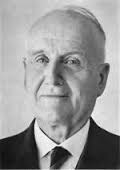
walter eichrodt

Biographical Information

Background

  • Born 1 August 1890 in Germany; Died 20 May 1978 in Switzerland

Education & Career

  • 1915 received doctorate from University of Heidelberg
  • 1922-1960 taught at Old Testament and History of Religion at University of Basel

His Theological Method

  • Emphasized the concept of covenant (understood under the tripartitite rubric of God’s relationship with his people, the world, and man) as the central theme of the OT.
  • Argued that we should study the OT via synchronic cross-sections that reveal the inner dynamics of Israelite faith.
  • Avoided organizing his theology around categories drawn from dogmatic theology (systematic theology), choosing instead to draw the categories right out of the OT itself.
  • Made extensive use of the results of historical research.
  • Sought to understand the OT in connection with other ANE religions (i.e., he interpreted the OT in light of its cultural context).
  • Understood the OT and NT as dependent upon one another in order to properly understand either and when studying a particular OT text he looked forward to see the end result in the NT (i.e., he interpreted the OT in light of its biblical context).

His Contribution to Old Testament Theology

  • Regarding biblical studies, he demonstrated the importance of emphasizing the Bible’s theological message rather than merely its religious history. In this way, he helped establish OT theology in its normative aspect for believers today.
  • He nevertheless showed how it was possible to use the results of historical-critical methods in order to understand the essence of the Old Testament’s theological message.
  • He legitimized the use of typological exegesis as an appropriate method of exegesis and explained way it was valuable in biblical theology for maintaining a close relationship and unity between the OT and NT.

Some Problems with His Method

  • The assumption that Israelite faith (and the covenant for that matter) does not evolve over time is questionable.
  • To identify the concept of covenant, or anything else, as the center of the OT does not do justice to the diversity of Scripture (e.g., where is the concept of covenant to be found in the Wisdom literature?).
  • So much focus on the Mosaic Covenant with the result that Abrahamic, Davidic, and New Covenants are neglected by comparison (not to mention other themes that might be within the OT).
  • Some found fault in his attempt to combine the study of the history of Israel’s religion with OT theology, claiming that these two belong in distinct and separate disciplines.

His Writings Available in English

“Covenant and Law.” Interpretation 20, no. 3 (1966): 302-321.

Ezekiel: A Commentary. Old Testament Library,  trans. Cosslett Quinn (Philadelphia: Westminster Press, 1970).

“In the Beginning” in Israel’s Prophetic Heritage, eds. B. W. Anderson and W. Harrelson (London: SCM Press, 1962): 1-10.

“Is Typological Exegesis and Appropriate Method?” in Essays on Old Testament Hermenuetics, ed. Claus Westermann (Richmond, VA: John Knox Press, 1963): 224-245.

“Law and The Gospel: Meaning of the Ten Commandments in Israel and For Us.” Interpretation 11, no. 1 (1957): 23-40.

Man in the Old Testament, trans. K. and R. Gregory Smith. Studies in Biblical Theology, no. 4 (London: SCM Press, 1961).

“Prophet and Covenant: Observations on the Exegesis of Isaiah” in Proclamation and Presence (Richmond, VA: John Knox Press, 1970): 167-188.

“Right Interpretation of the Old Testament: A Study of Jeremiah 7:1-15.” Theology Today 7, no. 1 (1950): 15-25.

Theology of the Old Testament, 5th revised edition, 2 vols, trans. J. A. Baker (Philadelphia: Westminster Press, 1961-1967).

← Older posts
Newer posts →

Categories

  • Biblical Studies (20)
  • Historical Studies (12)
  • People to Know (27)
  • Poetry (2)
  • Prayers (7)
  • Research Topics / Book Ideas (3)
  • Resources (52)
  • Reviews (24)

Posts

  • February 2023 (1)
  • September 2022 (1)
  • October 2020 (1)
  • February 2020 (1)
  • December 2019 (1)
  • August 2019 (1)
  • February 2019 (3)
  • December 2018 (1)
  • June 2018 (1)
  • May 2018 (2)
  • March 2018 (6)
  • January 2018 (1)
  • November 2017 (1)
  • October 2017 (1)
  • May 2016 (4)
  • April 2016 (3)
  • March 2016 (10)
  • February 2016 (1)
  • January 2016 (4)
  • December 2015 (5)
  • October 2015 (1)
  • September 2015 (6)
  • February 2015 (1)
  • January 2015 (6)
  • December 2014 (12)
  • November 2014 (8)
  • October 2014 (1)

Enter your email address to follow this blog and receive notifications of new posts by email.

Join 46 other subscribers

Currently Reading

Blogs I Follow

  • Malcolm Guite
  • The Cruciform Pen
  • βιβλιοσκώληξ
  • Holy Writ & Sacred Witness
  • Griffin Paul Jackson
  • Koine-Greek
  • Biblical Studies
  • Bible Design Blog
  • Theological Studies
  • καὶ τὰ λοιπά
  • Euangelion
  • Evangelical Textual Criticism
  • NT Blog

Blog at WordPress.com.

Malcolm Guite

Blog for poet and singer-songwriter Malcolm Guite

The Cruciform Pen

toward a cross-shaped life

βιβλιοσκώληξ

βιβλιο: "book"; σκώληξ: "worm"

Holy Writ & Sacred Witness

...eyes on the Word; ears to the ground...

Griffin Paul Jackson

Word architect.

Koine-Greek

Studies in Greek Language & Linguistics

Biblical Studies

Bible Design Blog

Theological Studies

An Internet Resource for Studying Christian Theology

καὶ τὰ λοιπά

A blog by Daniel R. Streett all about Early Judaism, Biblical Studies, Koine Greek, καὶ τὰ λοιπά

Euangelion

toward a cross-shaped life

Evangelical Textual Criticism

toward a cross-shaped life

NT Blog

toward a cross-shaped life

  • Subscribe Subscribed
    • The Cruciform Pen
    • Join 46 other subscribers
    • Already have a WordPress.com account? Log in now.
    • The Cruciform Pen
    • Subscribe Subscribed
    • Sign up
    • Log in
    • Report this content
    • View site in Reader
    • Manage subscriptions
    • Collapse this bar
 

Loading Comments...