• Home
  • About
  • Resources

The Cruciform Pen

~ toward a cross-shaped life

The Cruciform Pen

Category Archives: Biblical Studies

Recent Books on Paul

02 Tuesday Jan 2018

Posted by thecruciformpen in Biblical Studies, People to Know, Resources, Reviews

≈ Leave a comment

Tags

Biographies, Douglas A. Campbell, Gordon Fee, John M. G. Barclay, N. T. Wright, New Perspective on Paul, Paul's Epistles, Pauline Theology

There is a bundle of new books out recently (or coming out soon) on the apostle Paul, and by some pretty big hitters too.

Paul_Wright

In case anyone was wondering if N.T. Wright had anything else left to say about Paul after he published his magnum opus several years ago (1,500 pages of text!), he does. And this time it is a biography. I am looking forward to reading this one; I already put in a pre-order.

Paul_Fee

Gordon Fee may be getting old but you couldn’t tell from his writing (incidentally, I imagine folks said the same thing about Paul too). At a brief +/-200 pages this book will make a great read for folks who aren’t looking to exhaust the subject. If you have read Fee’s Pauline Christology I suspect there will be some overlap (or condensing?) but with a gifted writer as Fee is, you will never be bored. Buy this book. It may be his last.

Paul_Campbell

Douglas Cambell is another big hitter in Pauline studies, particularly of the ‘apocalyptic Paul’. I am guessing this book is an attempt to aim some of his scholarly thought (e.g., The Deliverance of God) at more popular audience. Nevertheless, it will be interesting to see how Campbell teases out his ideas about how Paul’s thought develops and changes from his conversion to his death.

Paul_Barclay

John Barclay has also recently published a major work on Paul (Paul & The Gift), so why another book? Well, this one is part of the ‘Very Brief Histories’ series, so I imagine its genesis has more to do with the publishers wanting Barclay’s authorship than any new developments in Barclay’s thought on Paul. But, at just over 100 pages it would make a nice winter read with a cup of hot chocolate.

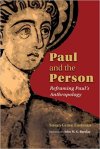
Paul_SusanEastman

Finally (for this list anyway), there is the more narrowly focused book by Susan Eastman of Duke Divinity, Paul and the Person: Reframing Paul’s Anthropology. With a foreword (and endorsement) by John Barclay it promises to be rewarding. Although it will probably be most appealing to academics and scholars, it will also probably be relevant for Christians interested in psychology and counseling (due to the focus on personhood).


Oxford Handbook of Sacramental Theology

08 Sunday May 2016

Posted by thecruciformpen in Biblical Studies, Historical Studies, People to Know, Resources, Reviews

≈ Leave a comment

Tags

Baptism, Bibliography, Eucharist, Sacraments

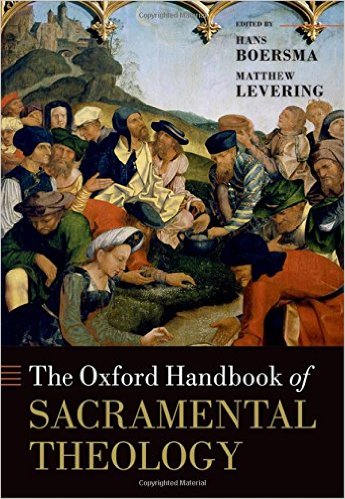
Oxford Handbook of Sacramental Theology

I’ve been reading through The Oxford Handbook of Sacramental Theology. Unfortunately, on account of the history of Christian doctrine the phrase “sacramental theology” can send shivers down the spine of a protestant evangelical. In light of this book’s actual content a more helpful description would be to call it a “theology of the sacraments”. The book has a truly ecumenical line-up of authors contributing chapters (e.g., Anglican, Presbyterian, Orthodox, Evangelical, Methodist, Mennonite, and, yes, Roman Catholic). This means, inevitably, that sometimes chapters will have divergent views regarding the identity and nature of the sacraments (or ordinances if you prefer that term). However there is much to be gleaned from traditions different from our own. There is a veritable smorgasbord to feast on and it will stimulate and enrich your thinking about the sacraments. The book is organized into sections covering biblical, historical (patristic, medieval, and reformation through today), dogmatic, philosophical and theological categories.

Here is a few sample quotes that I found particularly thought-provoking:

“Strikingly, the fourth gospel omits the words of institution altogether, an omission which has attracted various explanations…perhaps a more promising explanation is that John intended the footwashing of John 13 to be understood as a parabolic reenactment of the Eucharist…On this theory, if the Eucharist commemorates and gives concrete expression to Jesus’s self-giving unto death, the fourth evangelist may well be interpreting sacramental participation as a call to selfless acts of humble service, exemplified iconically in Jesus’ washing of the disciples’ feet.” (Nicholas Perrin, 54)

“The symbolic action presents divine testimony” (Michael Allen, 288)

“In the eucharistic liturgy, the church journeys to the kingdom that is to come to enjoy the first fruits of the new creation. The church thereby discovers the kingdom is not some other, spiritual world, but this world of eating and drinking transfigured in resurrection life. By its participation in the Eucharist, the church becomes a sign of the coming kingdom, a real-life preview of what the world will be.” (Peter J. Leithart, 640)

I especially enjoyed the following chapters:

1. R.W.L. Moberly, “Sacramentality in the Old Testament”

3. Craig A. Evans and Jeremiah J. Johnston, “Intertestamental Background of the Christian Sacraments”

4. Nicholas Perrin, “Sacraments and Sacramentality in the New Testament”

5. Edith M. Humphrey, “Sacrifice and Sacrament: Sacramental Implications of the Death of Christ”

6. Richard Baukham, “Sacraments and the Gospel of John”

8. Luke Timothy Johnson, “Sacramentality and the Sacraments in Hebrews”

19. Michael Allen, “Sacraments in the Reformed and Anglican Reformation”

39. David Brown, “A Sacramental World: Why it Matters”

41. Peter J. Leithart, “Signs of the Eschatological Ekklesia: The Sacraments, The Church, and Eschatology”

But there were also excellent chapters by Scott Swain, Geoffrey Wainwright, Dennis Olson, David Lincicum, Everett Ferguson, Andrew Louth, George Hunsinger, Peter Galadza, Gordon Lathrop, and Catherine Pickstock.

The following is a list of key resources for a theology of the sacraments:

Bibliography for a Theology of the Sacraments

  • Beasley-Murray, G. R. Baptism in the New Testament. Eerdmans, 1973.
  • Boersma, Hans. Heavenly Participation: The Weaving of a Sacramental Tapestry. Eerdmans, 2011.
  • Brown, David. God and Grace of Body: Sacrament in Ordinary. Oxford University Press, 2011.
  • Byars, Ronald P. The Sacraments in Biblical Perspective: Interpretation: Resources for the Use of Scripture in the Church. Westminster John Knox Press, 2011.
  • Cavanaugh, William T. Torture and Eucharist: Theology, Politics, and the Body of Christ. Wiley-Blackwell, 1998.
  • Chan, Simon. Liturgical Theology: The Church as Worshiping Community. IVP Academic, 2006.
  • Danielou, Jean. Bible and the Liturgy. University of Notre Dame Press, 2002.
  • Davison, Andrew. Why Sacraments? Cascade Books, 2013.
  • Gerrish, B. A. Grace and Gratitude: The Eucharistic Theology of John Calvin. Wipf & Stock Pub, 2002.
  • Schmemann, Alexander. For the Life of the World: Sacraments and Orthodoxy. 2nd Revised & enlarged edition. St. Vladimir’s Seminary Press, 1973.
  • ———. The Eucharist: Sacrament of the Kingdom. Translated by Paul Kachur. St Vladimirs Seminary Pr, 2003.
  • Thompson, Philip E. Baptist Sacramentalism: Edited by Anthony R. Cross. Wipf & Stock Pub, 2007.
  • Torrance, James B. Worship, Community and the Triune God of Grace. IVP Academic, 1997.
  • Wainwright, Geoffrey. Eucharist and Eschatology. Order of Saint Luke Pub, 2002.
  • Wright, N. T. The Meal Jesus Gave Us. Westminster John Knox Press, 2015.
  • Zee, Leonard J. Vander. Christ, Baptism and the Lord’s Supper: Recovering the Sacraments for Evangelical Worship. IVP Academic, 2004.
  • Zizioulas, John D. The Eucharistic Communion and the World. Edited by Luke Ben Tallon. Bloomsbury T&T Clark, 2011.

Recent Articles in JSNT

07 Thursday Apr 2016

Posted by thecruciformpen in Biblical Studies, Resources

≈ Leave a comment

Tags

Apocalyptic Interpretation, Pauline Theology, Pistis Christou

jsnt

Journal for the Study of the New Testament has some good articles just out last month. Two in particular are worth mentioning:

What to Expect when you’re Expecting: Maternity, Salvation History, and the “Apocalyptic Paul” by J.P. Davies, JSNT 38:3 (2016) 301-315.

Here is the abstract:

This article argues, on the basis of Jewish and Christian apocalypses, that ‘apocalyptic’ in Paul should not be understood as antithetical to ‘salvation history’. It focuses on one of Paul’s key metaphors, childbirth, which has been identified as an image intrinsically connected to Paul’s apocalyptic eschatology. It will first offer a brief survey of the way the image of childbirth has been deployed in recent ‘apocalyptic’ interpretations of Paul (notably the work of Beverly Gaventa) in support of a ‘punctiliar-invasive’ theology of history over against a ‘linear-progressive’ view. It will then examine some of the evidence from the apocalyptic literature where childbirth is used as an eschatological metaphor, particularly in the book of Revelation. It will argue that an understanding of the logic of this metaphor in Second Temple Jewish and early Christian apocalyptic thought raises questions about the eschatological dichotomy at the heart of the contemporary ‘apocalyptic Paul’ movement.


‘Christ-Faith’ as an Eschatological Event (Galatians 3.23-26): A ‘Third View’ on Πιστις Χριστου by Benjamin Schliesser, JSNT 38:3 (2016) 277-300.

Here is the abstract:

The meaning of πιστις Χριστου in Paul (Gal. 2.16, 20; 3.22; Rom. 3.22, 26; Phil. 3.9) continues to be the subject of controversial debate in Pauline scholarship. Should the genitive construction be understood objectively as ‘faith in Christ’ or subjectively as ‘the faith(fulness) of Christ’? The prevalent either/or character of the discussion is increasingly proving to be an impediment to finding a solution to this issue. A minority view, the so-called ‘third view’, seeks to move beyond the subjective-objective dichotomy by accounting for the intrinsic complexity of the Greek genitive and pointing to the event-character of in πιστις Paul. The primary reference text for this ‘third-view’ is Gal. 3. 23–26, which exhibits an altogether remarkable language of faith and envisages πιστις as ‘coming’ (ερχεσθαι) and as ‘being revealed’ (αποκαλυπτεσθαι). This article reviews the exegetical status quaestionis and argues that Paul does not regard πιστις Χριστου as an individual disposition or character (either Christ’s or that of the believer), but rather as an eschatological event. The aim is not to offer a comprehensive analysis of the verses in question, but to advance exegetical and theological support for the ‘third view’ and to point to its considerable explanatory power in our effort for a more nuanced appreciation of Paul’s language of faith.

(click here for JSNT webpage)

Video

Brant Pitre on Jesus & the Last Supper

20 Sunday Mar 2016

Posted by thecruciformpen in Biblical Studies, People to Know, Resources

≈ Leave a comment

Tags

Brant Pitre, Interview, Jesus, The Last Supper

Brant Pitre is quickly becoming one of my favorite Catholic authors (along with Scott Hahn). Although I’ve only read two of Pitre’s books, they are both excellently written (the other one I’ve read is Jesus, the Tribulation, and the End of Exile: Restoration Eschatology and the Origin of the Atonement).

Here is a 24 minute interview with Pitre on his new book Jesus and the Last Supper:


Two new books by Stephen J. Wellum

18 Friday Mar 2016

Posted by thecruciformpen in Biblical Studies, People to Know, Resources

≈ 1 Comment

Tags

Christology, Covenant Theology, Dispensationalism, Progressive Covenantalism, Stephen J. Wellum

In 2012, Stephen J. Wellum co-authored Kingdom Through Covenant: A Biblical-Theological Understanding of the Covenants along with Peter Gentry. It was received well, though not without making a few people uncomfortable from both covenant and dispensational camps. The work was a critique of both systems (with regard to weaknesses perceived by Gentry and Wellum), but also intended to provide a constructive way forward via biblical theology. Here is a 5 minute YouTube video of Gentry and Wellum discussing Kingdom Through Covenant.Progressive Covenantalism
In the same vein, Wellum is now releasing Progressive Covenantalism: Charting a Way Between Dispensational and Covenant Theologies (B&H Academic).  Preorder on Amazon here.

god the son incarnate (wellum)

On a different note (more a systematic theology genre than a biblical theology genre) Wellum is releasing God the Son Incarnate: The Doctrine of Christ (Crossway). This is his contribution in the Foundations of Evangelical Theology series (a great series!). Preorder on Amazon here.

A Narrative Model for Active Reading

18 Monday Jan 2016

Posted by thecruciformpen in Biblical Studies, Resources, Reviews

≈ Leave a comment

Tags

Gospels, Jonathan Pennington, Narrative

penningtonJonathan Pennington, in Reading the Gospels Wisely: A Narrative and Theological Introduction, offers the following strategy for actively reading the Gospel narratives. He introduces his model by contrasting it with another common study method he calls the “Whatever Strikes Me” model (pg.171):

For many readers of narrative the meaning one comes away with is usually based on what we may call the “WSM Hermeneutic”–“Whatever Strikes Me.” That is, most readers–whether brand-new to the Gospels or lifelong readers–simply read the stories and take away from them whatever comes to mind, whatever stands out to them this time. At times this approach will be sufficient, thanks either to luck or to the intuitions of a generally skilled reader. But overall, for wise reading we need a more solid understanding of how stories work–how they speak and communicate–so that we can learn to read the Gospel narratives well and to adjudicate wisely among various good readings. We need a model for narrative analysis.


(for the following strategy see pgs.175-176; and esp. pgs. 202-203):

  • Isolate the Literary Unit

First, we need to determine the parameters of the story. What is the proper demarcation of the episode? Usually in the Gospels this will be clearly indicated by the paragraph breaks given in our Bibles.

  • Read the Story Multiple Times

We must keep the whole experience of the story at the forefront rather simply jumping right into analysis. Read it slowly. Read in quickly. Read it silently. Read it aloud. (If you can read it in Greek, all the better!)

  • Identify the Setting and the Characters

It is helpful to simply state what the setting is and to list all the characters. Who is here and where is this story happening?

  • Observe the Story

Are there key words or phrases or repeated ideas? Are cause-and-effect relationships stated? What illustrations are used , if any?Noting all these things will help you pay closer attention to the story. Ask questions of the text and write them down. Explore the text with an open mind. There are no stupid questions or observations!

  • Isolate the Different Scenes

At this stage it is helpful to take the whole pericope and simply break it up into different scenes (note above comments). The first scene will usually be the setting.

  • Analyze the Narrative:
    • Identify the Rising Tension
    • Identify the Climax
    • Identify the Resolution
    • Identify the Following Action/Interpretation
  • Think About the Contexts
    • Acts, Cycles, and Literary Structures
      • An act consists of several sequentially related stories together, and a cycle, a number of acts strung together. For example, the three lost/found parables in Luke 15 are all meant to be read as a unit (an act), and likewise Jesus’ journey to Jerusalem in Luke 9:51-19:27 is one large section (a cycle) with many acts within it (pg .186).
      • Sometimes several episodes are combined into literary structures in such a way that creates a greater meaning being communicated than individual episodes can give by themselves. A literary structure may be discerned when a series of episodes itself has a point and theme that goes beyond any individual pericope (pgs. 186-189). Pennington perceptively discerns a literary structure in Matthew 21-23 focused on Jesus as the son of David and the rejection of the Jewish leadership in Jerusalem.
    • The Whole Gospel Context Including Intratextuality, the Fourfold Gospel Book, and Jesus’ Death and Resurrection
      • Intratextuality = allusions to any particular story elsewhere in the same Gospel, thereby indicating that we should read these accounts in light of each other (pg.189). Pennington gives the following as some examples: Jesus’ predictions of his own impending death and resurrection, and also the appellation “king of the Jews” in the early chapters of Matthew in reference to Jesus instead of Herod.
      • Fourfold Gospel Book = Since what we are given in the Holy Gospels is not just individual stories or even individual books but rather a fourfold book, the best readings of any episode take into account relevant information from the rest of the Gospels canon. A good synopsis is valuable for this. By noting the similarities and differences between how the four evangelists tell their stories we can gain insight into how that particular evangelist develops his plot and motifs (pg. 192). To use a phrase that Abraham Kuruvilla uses often, “What is the author doing with what he is saying?”
      • Jesus’ Death and Resurrection = the focal point of the entire Gospel narratives (as indicated by the relative space given to the events surrounding Jesus’ final week). This means that any individual episode, act, or cycle must be read in the light of Jesus’ passion in order to understand it’s full significance. The sermon on the mount is given as an example of a unit whose full significance only comes to light after Jesus’ passion (pg. 195).
    • The Kingdom-Focused, Redemptive-Historical Context of the whole Canon
      • When we read the Gospels in light of the entire canon, we see that even the elaborate and complex stories of the Gospels do not exist in a vacuum but are clearly situated as part of the larger story of the whole Bible (pg.198).
  • Summarize the Pericope
    • This final step in the narrative model for active reading is important for forcing us to articulate what is most significant in a particular story. When writing the summary be sensitive to the narrative flow, characterization, and the various contexts as they affect its meaning (pg. 203).


The “Glory of God” in Romans

15 Friday Jan 2016

Posted by thecruciformpen in Biblical Studies, People to Know, Reviews

≈ Leave a comment

Tags

Apocalyptic Interpretation, Beverly Gaventa, Glory of God, Pauline Theology, Romans

Interpretation and the Claims of the TextI recently read a fascinating chapter by Beverly Gaventa on “The ‘Glory of God’ in Paul’s Letter to the Romans”. Gaventa contributed this chapter in the book Interpretation & the Claims of the Text: Resourcing New Testament Theology (Baylor University Press, 2014), a collection of essays in honor of Charles Talbert.

On the premise that relatively little scholarly work has been done on the phrase “the glory of God” (δοξα του θεου) in Paul’s letters Gaventa sets out to demonstrate three things (pg.29):

  1. That “glory of God” is an important motif in Romans
  2.  That it draws on earlier Jewish associations connecting God’s glory with God’s salvific presence
  3. That it plays a role in Paul’s apocalyptic interpretation of the gospel

In her survey of glory of God language in Romans, Gaventa highlights two particularly disputed passages: Romans 3.23 and 5.2.

With regard to Romans 3.23 Gaventa makes two moves. Firstly, she suggests that it should be translated (following Leander Keck and also The New American Bible) as follows: “all are deprived of the glory of God”. This brings our the passive voice of the verb (contra. the more common renderings “lack” or “fall short of”). Secondly, she draws attention to what exactly is meant by “glory of God” in the claim that humanity is deprived of it. She concludes that Paul “refers not to humanity’s own original state of glory but to the loss of its proper, worshipful relationship to God” (pg.31). As a side note, the Good News Translation of the Bible supports Gaventa’s reading of the glory-of-God language in this verse: “everyone has sinned and is far away from God’s saving presence” (Rom 3.23 GNB).

In regard to Romans 5.2, the phrase is usually read as hope for humanity’s own eschatological glory. Gaventa suggests rather that to hope in the glory of God means to expect God’s triumphant presence.

This leads into her discussion of how the Old Testament and other Jewish literature uses glory-of-God language to refer to God’s own presence (e.g. inter alia Ex 24.16; 40.34; Lev 9.23; Ps 56.6; Ezek 11.23). But she points out that in many places it is not just a general presence that is signified by the phrase “it is God’s presence as that presence powerfully triumphs over God’s intractable enemies” (pg.33, emphasis added). In other words, “God’s δοξα is not just God’s presence, but God’s presence for the purpose of an eschatological establishment of God’s saving kingdom” (pg.34).

This claim is supported by a survey of the ubiquitous, but little noticed, conflict language throughout Romans. Again, she concludes that “the ‘glory of God’ signals not only God’s own presence but something more — God’s presence as it triumphs over God’s own enemies, most especially the enemies named Sin and Death” (pg.36).

Among other ramifications of this reading for understanding Paul is that the resurrection of Jesus from the dead is not primarily a proof of his divinity or his identity as the messiah (although it is that, to be sure), but instead the “beginning of God’s triumph. That is why Paul can go on to say in Romans 6.9-10 that Death and Sin no longer rule over Christ; they have been defeated by the “glory of the father” (pg.36).

More could be said but I will stop here. Gaventa has certainly given us something to consider which has profound implications for how we understand a concept as important as the glory of God. As always her work is thought provoking and well worth the reading.

Soli Deo gloria.

This Day In History

25 Friday Dec 2015

Posted by thecruciformpen in Biblical Studies, Historical Studies

≈ Leave a comment

Tags

Antiochus Epiphane, Christmas, December 25, Jesus, Temple

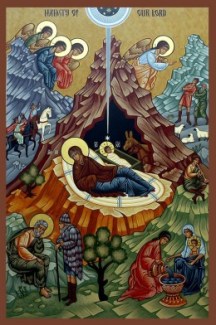
25 December is a day when Christians around the world celebrate the coming of God in the person of Jesus Christ (with the exception of the Eastern Orthodox Church, which observes Christmas on 7 January). nativity icon

However, 25 December had played a significant role in Jewish history before the advent (pun intended) of Christmas.

I am currently reading through Craig G. Bartholomew’s new book, Introducing Biblical Hermeneutics: A Comprehensive Framework for Hearing God in Scripture (Baker Academic, 2015).  I was reminded of the significance of 25 December when reading a section on the history of Judaism during the Second Temple period. Bartholomew says this (pages 162-163):

Under Syrian rule, Antiochus Epiphanes’s desecration of the temple on December 25, 167 BC, forced the issue of identity to the fore. Some refused to submit to Antiochus’s actions and died rather than submit. Others who escaped looked to Yahweh to act in a new and decisive way to vanquish his enemies. Judas Maccabeus and his companions organized a revolt and drove out Antiochus, so that three years to the day after its desecration, the temple was reconsecrated (December 25, 164 BC)…However, the ambiguity of the years that followed created the same sort of puzzle as had the “return from exile.” God had acted, but it seemed as though another great intervention must still come.

Indeed. Bartholomew does not go on to explore the significance of this in light of the date of the church’s celebration of Jesus’ coming, 25 December. First the desecration of the temple, then the reconsecration of the temple, and finally the arrival of the One who embodied in his own person what every previous temple was a mere symbol of (the book of Hebrews suggests this and much more). Jesus was God’s Temple par excellence.  “The Jews then said, ‘It has taken forty-six years to build this temple, and will you raise it up in three days?’ But he was speaking about the temple of his body.” (John 2.20-21)

Without pursuing it further here, let me suggest that we begin to think about the relation of Jesus’ birth (and the day we celebrate it) to the larger matrix of temple theology. I believe there is sufficient historical precedence for doing so.


Structural Ambiguity in John 3:15

28 Friday Nov 2014

Posted by thecruciformpen in Biblical Studies

≈ Leave a comment

Tags

English Versions, Syntax

Structural ambiguity exists “when a given word or phrase…can be taken as modifying any one of two (or more) different constituents” (Radford 66). It is not uncommon for languages to exhibit structural ambiguity. For example, in the sentence “The police will shoot terrorists with rifles” (Radford 106), the prepositional phrase with rifles could be understood in two different ways:

  1. modifying the verb shoot (in which case the police are the ones with rifles)
  2. modifying the noun terrorists (in which case the terrorists are the ones with rifles)

In the Gospel of John there is an interesting case of structural ambiguity involving the prepositional phrase ἐν αὐτῷ (“in him”). Here is the clause as it is in Greek: ἵνα πᾶς ὁ πιστεύων ἐν αὐτῷ ἔχῃ ζωὴν αἰώνιον (John 3:15). Does “in him” modify the preceding participle πιστεύων? Or does it modify some part of the following phrase ἔχῃ ζωὴν αἰώνιον?

"Believe in him" or "eternal life in him"?

Greek syntax allows for both options. And both options are represented in various English translations:

NIV (1984) “that everyone who believes in him may have eternal life”

NIV (2011) “that everyone who believes may have eternal life in him“

ESV “that whoever believes in him may have eternal life”

NCV “So that everyone who believes can have eternal life in him“

NLT “so that everyone who believes in him will have eternal life”

NLT (margin) “everyone who believes will have eternal life in him“

NASB “so that whoever believes will in Him have eternal life”

NASB (margin) “believes in Him will have eternal life”

KJV “That whosoever believeth in him should not perish, but have eternal life”

So which is correct? Although both are true doctrinally, a closer look at how John uses believing-in-him language elsewhere tips the scales in one direction.

A search on my Logos Bible Software turned up the following verses for the lemma πιστεύω within 3 words of the prepositional phrase ἐν αὐτῷ in the Gospel of John. Notice the first hit is the verse under consideration, while the second hit is actually a false hit because the prepositional phrase is actually part of the previous clause and does not modify πιστεύω.

John 3:15 ἵνα πᾶς ὁ πιστεύων ἐν αὐτῷ ἔχῃ ζωὴν αἰώνιον.

1 John 5:10 ὁ πιστεύων εἰς τὸν υἱὸν τοῦ θεοῦ ἔχει τὴν μαρτυρίαν ἐν αὐτῷ, ὁ μὴ πιστεύων τῷ θεῷ ψεύστην πεποίηκεν αὐτόν, ὅτι οὐ πεπίστευκεν εἰς τὴν μαρτυρίαν ἣν μεμαρτύρηκεν ὁ θεὸς περὶ τοῦ υἱοῦ αὐτοῦ.

On the other hand, ἐν αὐτῷ is not the only prepositional phrase available to communicate the idea. A writer could also use εἰς αὐτὸν to communicate the same idea. As it turns out,  a search for the lemma πιστεύω within 3 words of the prepositional phrase εἰς αὐτὸν in the Gospel of John turned up many more results.

John 2:11 Ταύτην ἐποίησεν ἀρχὴν τῶν σημείων ὁ Ἰησοῦς ἐν Κανὰ τῆς Γαλιλαίας καὶ ἐφανέρωσεν τὴν δόξαν αὐτοῦ, καὶ ἐπίστευσαν εἰς αὐτὸν οἱ μαθηταὶ αὐτοῦ.

John 3:16 οὕτως γὰρ ἠγάπησεν ὁ θεὸς τὸν κόσμον, ὥστε τὸν υἱὸν τὸν μονογενῆ ἔδωκεν, ἵνα πᾶς ὁ πιστεύων εἰς αὐτὸν μὴ ἀπόληται ἀλλʼ ἔχῃ ζωὴν αἰώνιον.

John 3:18 ὁ πιστεύων εἰς αὐτὸν οὐ κρίνεται· ὁ δὲ μὴ πιστεύων ἤδη κέκριται, ὅτι μὴ πεπίστευκεν εἰς τὸ ὄνομα τοῦ μονογενοῦς υἱοῦ τοῦ θεοῦ.

John 4:39 Ἐκ δὲ τῆς πόλεως ἐκείνης πολλοὶ ἐπίστευσαν εἰς αὐτὸν τῶν Σαμαριτῶν διὰ τὸν λόγον τῆς γυναικὸς μαρτυρούσης ὅτι εἶπέν μοι πάντα ἃ ἐποίησα.

John 6:40 τοῦτο γάρ ἐστιν τὸ θέλημα τοῦ πατρός μου, ἵνα πᾶς ὁ θεωρῶν τὸν υἱὸν καὶ πιστεύων εἰς αὐτὸν ἔχῃ ζωὴν αἰώνιον, καὶ ἀναστήσω αὐτὸν ἐγὼ [ἐν] τῇ ἐσχάτῃ ἡμέρᾳ.

John 7:5 οὐδὲ γὰρ οἱ ἀδελφοὶ αὐτοῦ ἐπίστευον εἰς αὐτόν.

John 7:31 Ἐκ τοῦ ὄχλου δὲ πολλοὶ ἐπίστευσαν εἰς αὐτὸν καὶ ἔλεγον· ὁ χριστὸς ὅταν ἔλθῃ μὴ πλείονα σημεῖα ποιήσει ὧν οὗτος ἐποίησεν;

John 7:39 τοῦτο δὲ εἶπεν περὶ τοῦ πνεύματος ὃ ἔμελλον λαμβάνειν οἱ πιστεύσαντες εἰς αὐτόν· οὔπω γὰρ ἦν πνεῦμα, ὅτι Ἰησοῦς οὐδέπω ἐδοξάσθη.

John 7:48 μή τις ἐκ τῶν ἀρχόντων ἐπίστευσεν εἰς αὐτὸν ἢ ἐκ τῶν Φαρισαίων;

John 8:30 Ταῦτα αὐτοῦ λαλοῦντος πολλοὶ ἐπίστευσαν εἰς αὐτόν.

John 9:36 ἀπεκρίθη ἐκεῖνος καὶ εἶπεν· καὶ τίς ἐστιν, κύριε, ἵνα πιστεύσω εἰς αὐτόν;

John 10:42 καὶ πολλοὶ ἐπίστευσαν εἰς αὐτὸν ἐκεῖ.

John 11:45 Πολλοὶ οὖν ἐκ τῶν Ἰουδαίων οἱ ἐλθόντες πρὸς τὴν Μαριὰμ καὶ θεασάμενοι ἃ ἐποίησεν ἐπίστευσαν εἰς αὐτόν·

John 11:48 ἐὰν ἀφῶμεν αὐτὸν οὕτως, πάντες πιστεύσουσιν εἰς αὐτόν, καὶ ἐλεύσονται οἱ Ῥωμαῖοι καὶ ἀροῦσιν ἡμῶν καὶ τὸν τόπον καὶ τὸ ἔθνος.

John 12:37 Τοσαῦτα δὲ αὐτοῦ σημεῖα πεποιηκότος ἔμπροσθεν αὐτῶν οὐκ ἐπίστευον εἰς αὐτόν,

John 12:42 ὅμως μέντοι καὶ ἐκ τῶν ἀρχόντων πολλοὶ ἐπίστευσαν εἰς αὐτόν, ἀλλὰ διὰ τοὺς Φαρισαίους οὐχ ὡμολόγουν ἵνα μὴ ἀποσυνάγωγοι γένωνται·

What this suggests is that when John wants to talk about ‘believing in him’ he uses the prepositional phrase εἰς αὐτὸν and not ἐν αὐτῷ. So when we come across the phrase ἐν αὐτῷ in John 3:15 it almost certainly is not modifying πιστεύω but rather some part of the following phrase ἔχῃ ζωὴν αἰώνιον. That is, the clause should be translated as “everyone who believes may have eternal life in him.”

Punctuation Changes in the Nestle-Aland 28th Edition Greek New Testament

23 Sunday Nov 2014

Posted by thecruciformpen in Biblical Studies

≈ 2 Comments

Tags

English Versions, Punctuation, Textual Criticism

Nestle_Aland_na28_1025485d39

When the new NA28 Greek New Testament was first released I was eager to thumb through it and examine the revised apparatus as well as the text-critical alterations that were introduced to the text. In the introduction the editors have helpfully included a chart listing all the passages in which the wording of the 28th edition differs from the wording of the 27th edition. This made finding the changes easy.

Soon after I started reading through it I discovered that there was also a difference in punctuation. This was not mentioned in the introduction. Now I am aware that all of our earliest extant manuscripts contain very few, if any, punctuation marks. As far as I am aware, there was not yet a standardized system of punctuation which could be universally accepted and enforced. Consequently, the documents from this period which do have punctuation marks are not always consistent in the ways they apply them.

So when we are thinking about how sentences and clauses are put together we often have to make decisions about which modern punctuation mark appropriately expresses the thought of the original text. Sometimes it may not make a big difference in the meaning of the sentence. Sometimes it may create a world of difference. For example, in Romans 9:5 the choice between a comma and a full stop (a period) can mean the difference between wether Christ or the Father is referred to as God (θεος). A quick comparison of just a couple English versions demonstrates the difference:

RSV: “…to them belong the patriarchs, and of their race, according to the flesh, is the Christ. God who is over all be blessed for ever. Amen.”

NIV: “…Theirs are the patriarchs, and from them is traced the human ancestry of the Messiah, who is God over all, forever praised! Amen.”

In the RSV there is a full stop between clauses and so “God” is read as a reference to the Father. In the NIV there is a comma between clauses and so “God” is read as a reference to the Messiah. Big difference!

Now this particular verse, although a good demonstration of the significance of punctuation, is not actually affected by the changes introduced in the NA28. The only changes that have been introduced, that I am aware of, are found in the General Epistles. I have gone through 2 Peter for a starter and catalogued all the differences in punctuation from NA27 to NA28. Here it is: Punctuation Comparison of NA²⁷ & NA²⁸ in 2 Peter

It shall be left for another day to determine the exact significance of each new punctuation mark.

Newer posts →

Categories

  • Biblical Studies (20)
  • Historical Studies (12)
  • People to Know (27)
  • Poetry (2)
  • Prayers (7)
  • Research Topics / Book Ideas (3)
  • Resources (52)
  • Reviews (24)

Posts

  • February 2023 (1)
  • September 2022 (1)
  • October 2020 (1)
  • February 2020 (1)
  • December 2019 (1)
  • August 2019 (1)
  • February 2019 (3)
  • December 2018 (1)
  • June 2018 (1)
  • May 2018 (2)
  • March 2018 (6)
  • January 2018 (1)
  • November 2017 (1)
  • October 2017 (1)
  • May 2016 (4)
  • April 2016 (3)
  • March 2016 (10)
  • February 2016 (1)
  • January 2016 (4)
  • December 2015 (5)
  • October 2015 (1)
  • September 2015 (6)
  • February 2015 (1)
  • January 2015 (6)
  • December 2014 (12)
  • November 2014 (8)
  • October 2014 (1)

Enter your email address to follow this blog and receive notifications of new posts by email.

Join 46 other subscribers

Currently Reading

Blogs I Follow

  • Malcolm Guite
  • The Cruciform Pen
  • βιβλιοσκώληξ
  • Holy Writ & Sacred Witness
  • Griffin Paul Jackson
  • Koine-Greek
  • Biblical Studies
  • Bible Design Blog
  • Theological Studies
  • καὶ τὰ λοιπά
  • Euangelion
  • Evangelical Textual Criticism
  • NT Blog

Blog at WordPress.com.

Malcolm Guite

Blog for poet and singer-songwriter Malcolm Guite

The Cruciform Pen

toward a cross-shaped life

βιβλιοσκώληξ

βιβλιο: "book"; σκώληξ: "worm"

Holy Writ & Sacred Witness

...eyes on the Word; ears to the ground...

Griffin Paul Jackson

Word architect.

Koine-Greek

Studies in Greek Language & Linguistics

Biblical Studies

Bible Design Blog

Theological Studies

An Internet Resource for Studying Christian Theology

καὶ τὰ λοιπά

A blog by Daniel R. Streett all about Early Judaism, Biblical Studies, Koine Greek, καὶ τὰ λοιπά

Euangelion

toward a cross-shaped life

Evangelical Textual Criticism

toward a cross-shaped life

NT Blog

toward a cross-shaped life

  • Subscribe Subscribed
    • The Cruciform Pen
    • Join 46 other subscribers
    • Already have a WordPress.com account? Log in now.
    • The Cruciform Pen
    • Subscribe Subscribed
    • Sign up
    • Log in
    • Report this content
    • View site in Reader
    • Manage subscriptions
    • Collapse this bar
 

Loading Comments...