• Home
  • About
  • Resources

The Cruciform Pen

~ toward a cross-shaped life

The Cruciform Pen

Category Archives: People to Know

Good Books On The Horizon!

09 Thursday Feb 2023

Posted by thecruciformpen in Biblical Studies, People to Know, Resources

≈ Leave a comment

Tags

New Releases

There are some really good books coming out this year. Here are some that I am looking forward to.
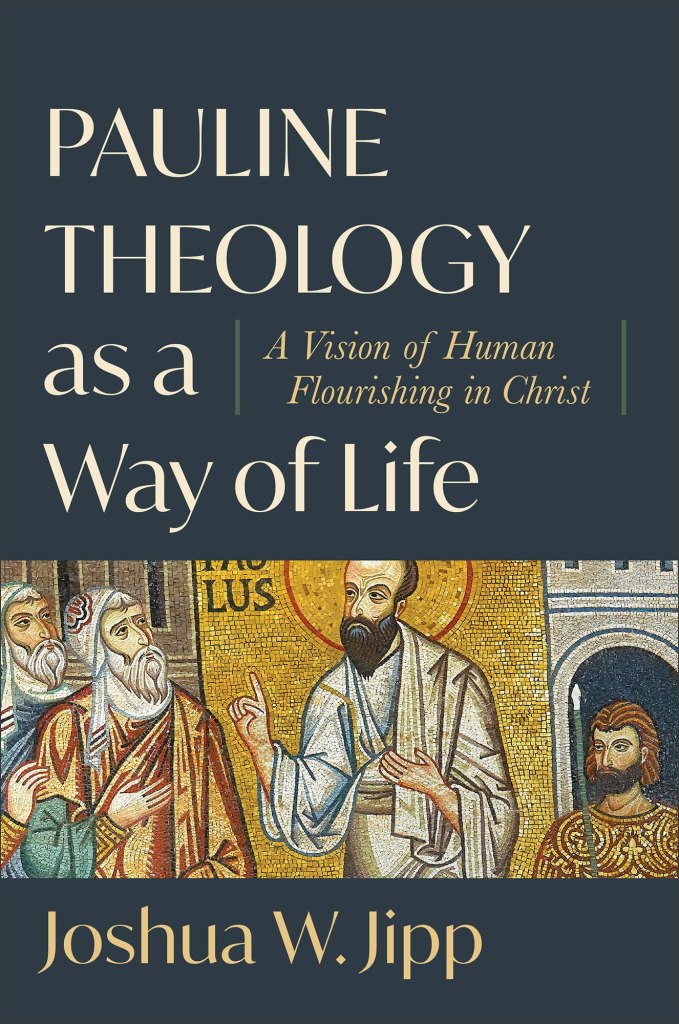
Pauline Theology as a Way of Life: A Vision of Human Flourishing in Christ (Baker Academic)

Joshua Jipp has previously written important works on both New Testament theology and Pauline studies. Here he brings the two together once again in what looks to be a great synthesis of Pauline belief and practice.

Look for it in July 2023.


A Jewish Paul: The Messiah’s Herald to the Gentiles (Baker Academic)

Matthew Thiessen is an expert on the relationship of first-century Judaism and early Christianity and a proponent of the so-called Paul within Judaism Schule. This book looks like it will be a great way to introduce someone to that particular school of thought. What I really like is that Thiessen has an important thesis and keeps the book under 200 pages! So often important ideas do not get widely disseminated because they are trapped inside 500+ page monographs.

Look for it in August 2023.


Beyond the Greek New Testament: Advanced Readings for Students of Biblical Studies (Baker Academic)

This new book by Max Botner is a carefully curated compilation of readings from ancient Greek literature (both Hellenistic and classical) outside of the New Testament. From the blurb: “Each reading includes a brief introduction to the text, suggested readings, and extensive footnotes that provide key points of grammar, vocabulary help, and cross-references to major Greek grammars.” I think it would be a great exercise to slowly work through these texts with an advanced grammar by your side (e.g., Heinrich von Siebenthal’s Ancient Greek Grammar for the Study of the New Testament [Peter Lang 2019] ).

Look for Botner’s book in July 2023.


Composition as Conversation: Seven Virtues for Effective Writing (Baker Academic)

This book by Heather Hoover is not strictly speaking related to biblical studies, at least not directly, but I am a big fan of what I call nuts-and-bolts resources. The seven virtues she develops are curiosity, attentiveness, relatability, open-mindedness, and generosity. I think these virtues are especially important for scholarship and higher education in general. This would be an excellent companion to Nijay Gupta’s little book, The Writer: A Guide to Research, Writing & Publishing in Biblical Studies (Cascade Books 2022). I teach at the undergraduate level and look forward to using Hoover’s new book to help students grow in their writing skills.

Look for it in June 2023.
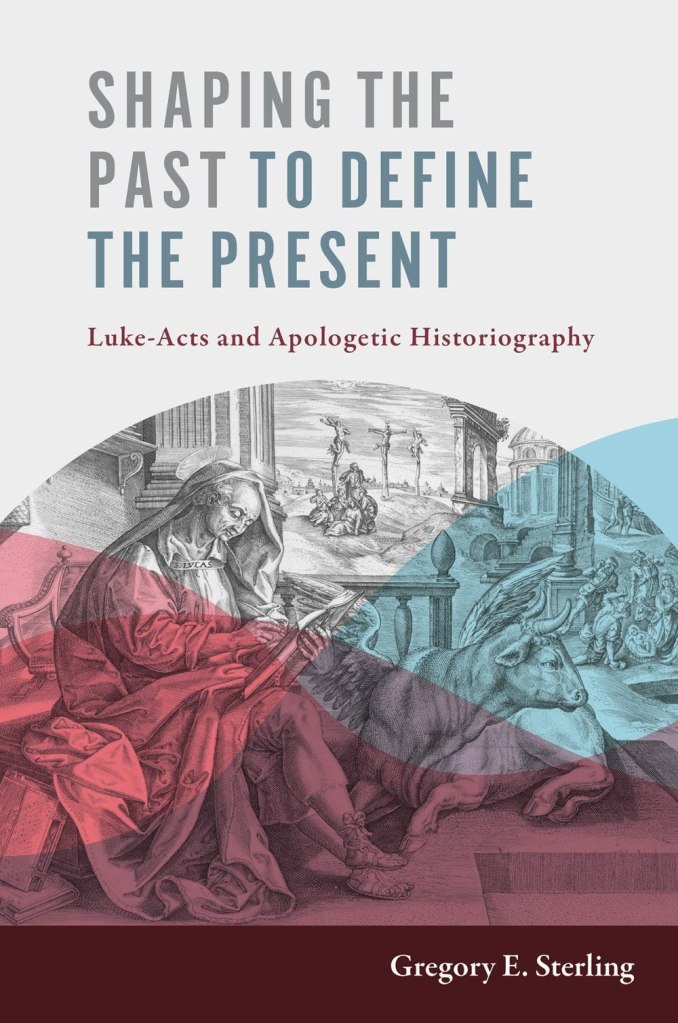

Shaping the Past to Define the Present: Luke-Acts and Apologetic Historiography (Eerdmans)

Greg Sterling, professor of New Testament at Yale Divinity School, is legendary for his work on Second Temple Judaism and early Christianity within the Greco-Roman world. This book is a collection of essays (some new, some old) and builds on his previous research on historiography. If you are interested in early Christian identity in the Greco-Roman world, buy this book.

Look for it in March 2023.
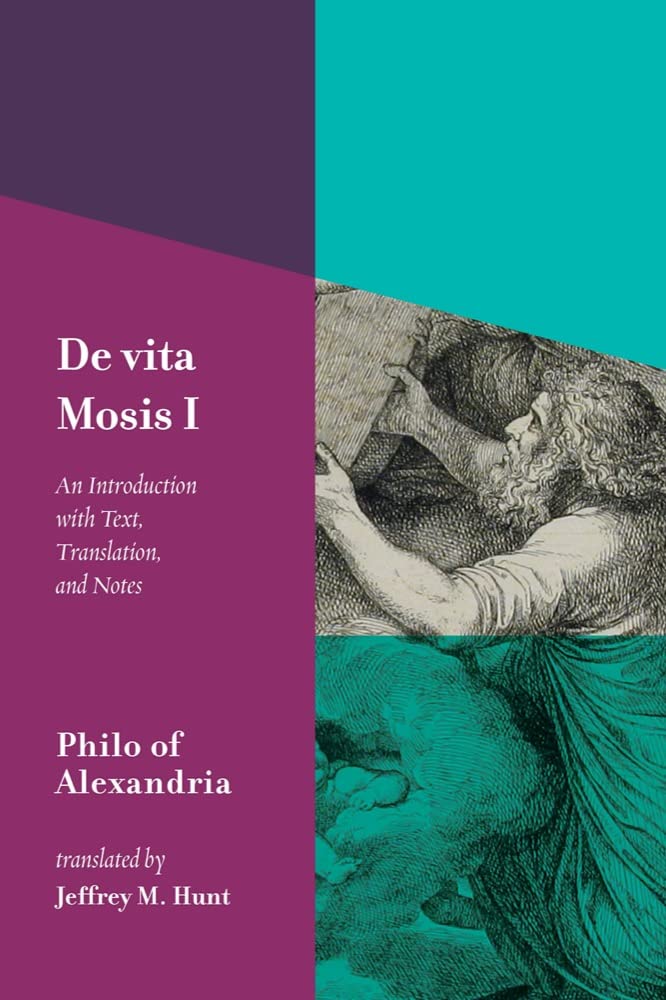

De vita Moses (Book 1): An Introduction with Text, Translation, and Notes (Baylor University Press)

As indicated in the title, Jeffrey Hunt has done a new translation of the first part of one of Philo’s works, sometimes known by its English name, On the Life of Moses. Philo, who lived at the turn of the era (ca. 20 BCE – 50 CE), is a key figure to study for learning about how the Jewish heritage was engaging the non-Jewish thought world around it. Not that Philo was representative of all Jews in the period, but he was certainly a high-profile and prolific author in Alexandria. This new translation comes with the parallel Greek text and explanatory notes “extrapolating on points more fully discussed elsewhere in the Philonic corpus, observing specific divergences from the Septuagint, and suggesting aspects of contemporary historical influence on Philo’s retelling of the biblical narrative” (from the blurb).

Look for it in March 2023.

Eerdmans eBook Sale – 80 books, 80% off

21 Wednesday Sep 2022

Posted by thecruciformpen in Biblical Studies, People to Know, Resources

≈ Leave a comment

Tags

Discounts, Eerdmans, Gospels, New Testament Studies, Paul

There are some great books for sale by Eerdmans until September 30th. Head over to the Eerdmans Blog (click here) to see the complete list.

Here are my top picks:

An Anomalous Jew: Paul Among Jews, Greeks, and Romans (Michael F. Bird) – $5.60

Gospel Women: Studies of the Named Women in the Gospels (Richard Bauckham) – $4.99

Paul and the Language of Faith (Nijay K. Gupta) – $6.99

Reading with the Grain of Scripture (Richard B. Hays) – $11.60

The Messianic Theology of the New Testament (Joshua Jipp) – $10.60

Reading the Epistles of James, Peter, John & Jude as Scripture: The Shaping and Shape of a Canonical Collection (David Nienhuis and Robert W. Wall) – $6.00

Apocalypse, Prophecy, and Pseudepigraphy: On Jewish Apocalyptic Literature (John J. Collins) – $6.80

T. F. Torrance on the virgin birth

07 Saturday Dec 2019

Posted by thecruciformpen in People to Know, Resources, Reviews

≈ Leave a comment

Tags

Books, Christmas, Incarnation, New Creation, T. F. Torrance, Virgin Birth

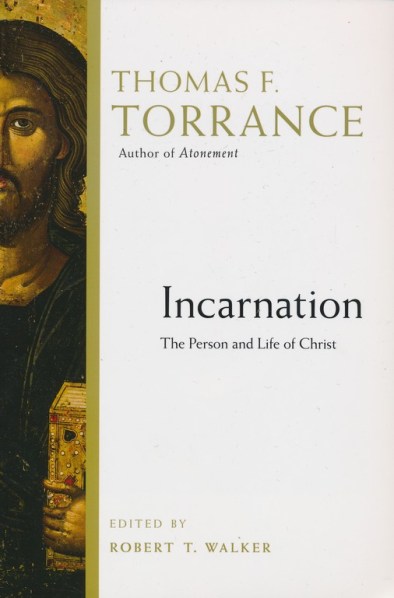
TFT_Incarnation

I’ve been reading Thomas F. Torrance’s Incarnation: The Person and Life of Christ a second time and I am once again struck with how profound Torrance is in his understanding of the incarnation of the eternal Son of God into our human being.

This is evident in his discussion of the virgin birth as a sign in relation to a thing signified:

The virgin birth cannot be understood apart from the whole mystery of Christ, apart from the union of divine and human nature in the one person of Jesus Christ. The virgin birth is the outward sign, the signitive form in humanity which the creative entry of the Son of God takes, when he assumes our human nature into union with his divine nature…[T]he mystery of the birth and the mystery of the person of Christ cannot be separated, and the mystery of the birth has to be understood  in the light of the mystery of his person, the sign in the light of the thing signified, not the thing signified in the light of the sign.

Or the insightful way he thinks about the virgin birth in relation to the resurrection:

In fact the birth of Jesus of the virgin Mary and the resurrection of Jesus from the virgin tomb (‘where no one had ever yet been laid’) are the twin signs which mark out the mystery of Christ…The incarnation is not only a once and for all act of assumption of our flesh, but the continuous personal union of divine and human nature in the one person of the incarnate Son, a personal union which he carried all the way through our estranged estate under bondage into the freedom and triumph of the resurrection…These are then the twin signs testifying to the miraculous life of the Son of God within our humanity, the one at the beginning and the other at the consummation of the earthly life of Jesus. Both these acts were sovereign creative acts of God’s grace in and upon and out of our fallen humanity, and they are, in the full sense, one continuous act including the whole historical life and work of the incarnate Son.

Or once again, explaining what the virgin birth teaches us about a new humanity:

[T]he incarnation of the Son in our humanity has its source in the hidden creative act of God, but it also assumes a form in the entry of the Son into our humanity which is appropriate to and is required by the nature of the incarnate Son as creator  as well as creature…It reveals God as the creator and redeemer actually with us in our estranged human existence, and as God bringing out of our fallen and sinful existence a new humanity that is holy and perfect.

Or, finally, consider how Torrance sees a fruitful analogy between the virgin birth and the salvation of each new believer:

John of Damascus remarked that Mary conceived through her ear: she heard the Word and the Word spoken by the Spirit in her ear begot himself in her and through her, and so the Word which Mary heard and received and obeyed  became flesh of her flesh. That is the normative pattern for the believer in his or her attitude toward the Word announced in the gospel, which tells men and women of the divine act of grace and decision taken already on their behalf in Christ…As in the annunciation of the word to Mary, Christ the Word himself became flesh, so in the enunciation of the gospel, we surrender in like manner to Christ the Word now made flesh, and there takes place in us the birth of Jesus, or rather, we are in a remarkable way given to share through grace in his birth and to share in the new creation in him. That is the Christian message – the Christmas message…What happened once and for all, in utter uniqueness in Jesus Christ, happens in every instance of rebirth into Christ, when Christ enters into our hearts and recreates us. Just as he ws born from above of the Holy Spirit, so we are born from above of the Holy Spirit through sharing in his birth.


The above selections of text are all quoted from chapter three, “The Once and for all Union of God and Man: Christ’s Birth into our Humanity” (pgs.87-104).

If you buy and read this book over Christmas it will be the most profound “Christmas book” that you read this year. Guaranteed.

Buy it from Amazon here: Incarnation: The Person and Life of Christ

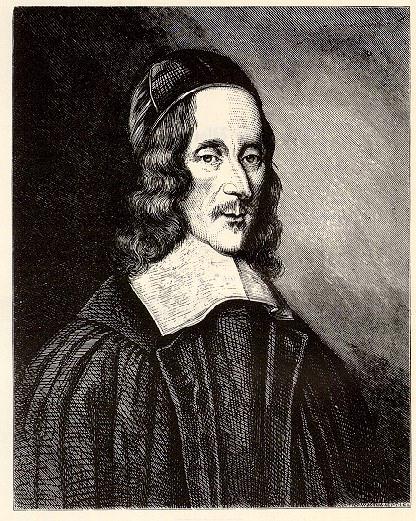
George Herbert, poet-priest

27 Wednesday Feb 2019

Posted by thecruciformpen in Historical Studies, People to Know, Poetry, Prayers

≈ Leave a comment

Tags

George Herbert, Lesser Festival, Liturgical Calendar, Poetry

Facts, events, and important dates

  • 1593–Born in Wales
  • Education–Trinity College, Cambridge
  • Held several academic posts in Cambridge, including a Fellowship at Trinity, appointed as Reader in Rhetoric, and then Public Orator.
  • 1624–Served in politics as MP in Parliament.
  • 1625–King James I dies, consequently Herbert decides return to his original intentions for ministry in the church.
  • 1630–Herbert ordained as priest in the Church of England.
  • 1633–Herbert struggled with Tuberculosis and eventually dies after a just a few years of pastoral ministry in the church.
  • All of George Herbert’s poetry was composed privately, not being published until after his death. This fact is a remarkable demonstration of his characteristic refusal to seek self-aggrandizement in life.
  • A Lesser Feast is dedicated to George Herbert in the Anglican Communion church calendar, celebrated on 27 February (hence, this blog post :))

Legacy

Herbert’s prose and poetry has left a lasting influence on others. Henry Vaughan, Charles Wesley, Samuel Taylor Coleridge, Gerard Manley Hopkins and C. S. Lewis are just a few names (more could be added) of people who have acknowledged their literary debt to Herbert; and that’s not to mention contemporary poets such as Luci Shaw or Malcom Guite.

He is best known today from two significant works, one prose and one poetry. The prose work is titled A Priest to the Temple or The Country Parson and it lays out his thoughts on the ministerial vocation. His insights in this book find richly suggestive connections in some of his poems on the same topic. His collection of poetry, which he gave to his friend Nicholas Ferrar on his deathbed, is titled The Temple. It is a brilliant masterpiece whose poems can be read individually (that is, as a collection of self-contained poems) or as a larger, longer work complete with thematic development as one progresses through the poems. Throughout The Temple there are dense allusions both to scripture and to other poems within the collection.

Some of his hymns are still sung in churches today (e.g., ‘The God of love my Shepherd is’, ‘Let all the world in every corner sing’, and ‘Teach me, my God and King’).

A poem

Prayer (I)

Prayer the Churches banquet, Angels age,
Gods breath in man returning to his birth,
The soul in paraphrase, heart in pilgrimage,
The Christian plummet sounding heav’n and earth;  

Engine against th’ Almightie, sinners towre,
Reversed thunder, Christ-side-piercing spear,
The six-daies world transposing in an houre,
A kinde of tune, which all things heare and fear;

Softnesse, and peace, and joy, and love, and blisse,
Exalted Manna, gladnesse of the best,
Heaven in ordinarie, man well drest,
The milkie way, the bird of Paradise,

Church-bels beyond the starres heard, the souls bloud,
The land of spices; something understood.

~extract from The English Poems of George Herbert (Page 178). Cambridge University Press. Kindle Edition.

Malcolm Guite has an insightful reflection on this poem over on his blog. Click here to read it. He introduces the poem by describing it as

a kind of rainbow refraction of many insights, a scattering of many seeds broadcast. For each of these images is in its own way a little poem, or the seed of a poem, ready to grow and unfold in the readers mind. And the different seeds take root at different times, falling differently in the soil of the mind each time one returns to this poem. I have been reading it for over thirty years now and I still find its images springing up freshly in my mind and showing me new things. For the purpose of this Introduction we will delve in and examine four of these little seeds, these poems in themselves within the images, before we take a wider view and see how they all fit together in the larger poem itself.

To read Guite’s reflections on “four of these little seeds” click the link above or just buy his book Faith, Hope and Poetry: Theology and the Poetic Imagination.

Further reading

There are many good editions of Herbert’s poetry that can be found. The books below are helpful introductions to his life and writings. Alternatively, if you are not yet ready to read a whole book, you can start by visiting this website that lots of interesting facts and resources: GeorgeHerbert.org.uk

Music at Midnight: The Life and Poetry of George Herbert by John Drury

Heaven in Ordinary: George Herbert and His Writings (Canterbury Studies in Spiritual Theology) edited by Philip Sheldrake

A Year With George Herbert: A Guide to Fifty-Two of His Best Loved Poems by Jim Scott Orrick

A Prayer (from the Book of Common Prayer)

King of glory, king of peace,
who called your servant George Herbert
from the pursuit of worldly honors
to be a priest in the temple of his God and king:
grant us also the grace to offer ourselves
with singleness of heart in humble obedience to your service;
through Jesus Christ your Son our Lord,
who is alive and reigns with you,
in the unity of the Holy Spirit ,
one God, now and forever. Amen.

*A note on sources…

The biographical information in this post was obtained from the Oxford Dictionary of the Christian Church (edited by Livingston and Cross) and also from Saints on Earth: A biographical companion to Common Worship (by Darch and Burns).

Forthcoming Books

02 Saturday Jun 2018

Posted by thecruciformpen in Biblical Studies, Historical Studies, People to Know, Resources

≈ Leave a comment

Tags

Commentaries, Gospels, New Releases, Pauline Theology, Second Temple Judaism, Textual Criticism

Biblical Studies

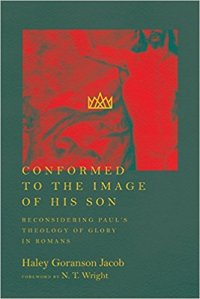
Conformed to the Image of His Son: Reconsidering Paul’s Theology of Glory in Romans (Haley Grandson Jacob, w/ a foreword by NT Wright, IVP Academic)

41S8dyVWHDL._SX331_BO1,204,203,200_

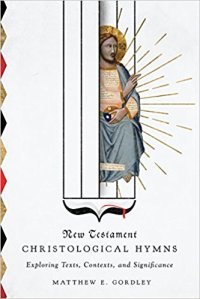
New Testament Christological Hymns: Exploring Texts, Contexts, and Significance (Matthew E. Gordley, IVP Academic)

51Dpf8gPBXL._SX331_BO1,204,203,200_

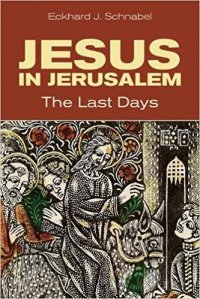
Jesus in Jerusalem: The Last Days (Eckhard Schnabel, w/ a foreword by Craig Evans, Eerdmans)

61KdsJxu5+L._SX331_BO1,204,203,200_


Second Temple Judaism

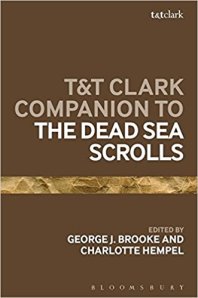
T&T Clark Companion to the Dead Sea Scrolls (Ed. by George Brooke and Charlotte Hempel, T&T Clark)

41qAlbIWZNL._SX329_BO1,204,203,200_


Commentaries

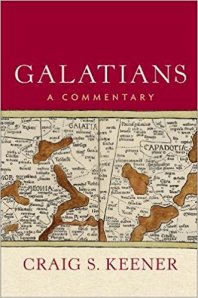
Galatians: A Commentary (Craig S. Keener, Baker Academic)

51xoyVJ4+2L._SX329_BO1,204,203,200_

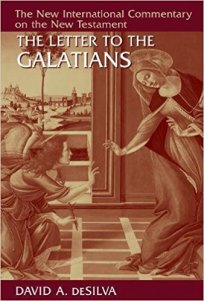
The Letter to the Galatians NICNT (David A. deSilva, Eerdmans)

51AWtF9wuvL._SX336_BO1,204,203,200_


Textual History of the New Testament

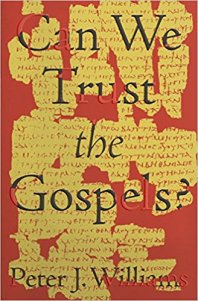
Can We Trust the Gospels? (Peter J. Williams, Crossway)

51ueDs9pa1L._SX326_BO1,204,203,200_

2018 Gifford Lectures (Part 5)

14 Wednesday Mar 2018

Posted by thecruciformpen in Biblical Studies, Historical Studies, People to Know, Resources

≈ Leave a comment

Tags

Eschatology, Gospels, Jesus, Kingship, Lectures, N. T. Wright, New Releases, Temple

Here is my favorite quote from the previous lecture (lecture 4):

The gospels do not contain apocalyptic, in the first century sense they are apocalyptic. They are describing how the revelation, the unveiling, the visible coming of God took place; thus as far as the gospel writers were concerned…YHWH had returned to his people

As Wright explains, the theme of the return of YHWH has huge implications for understanding, among other things, Jesus’ well known journey toward Jerusalem beginning in Luke 9:51 and culminating in his death and resurrection. Luke tells the story in such a way to suggest that Jesus’ journey is the “actualization” of YHWH’s return to Jerusalem which was long-foretold by the prophets. This highlights the seriousness of Jesus’ “apocalyptic” rebuke of Jerusalem in ch. 13 and again in ch. 19, “You did not recognize the time of God’s coming to you!”

There is a lot to consider there, but I will leave it as is for now. Below is the video for the next lecture, titled “The Stone the Builders Rejected: Jesus, the Temple and the Kingdom”

As always, here is the link to the University of Aberdeen webpage for the lectures.

2018 Gifford Lectures

06 Tuesday Mar 2018

Posted by thecruciformpen in Historical Studies, People to Know, Resources

≈ Leave a comment

Tags

Eschatology, History, Jesus, Lectures, N. T. Wright, New Creation, New Releases

The first 6 lectures (out of 8 total)  by N.T. Wright are available to watch online (via YouTube) from the University of Aberdeen. I will post one at a time since probably not many of us have time to watch more than one lecture in a single sitting.

Here is the blurb from the University of Aberdeen:

The Gifford Lectures—held regularly at the four ancient Scottish universities of Edinburgh, Glasgow, St. Andrews and Aberdeen—were established under the will of Adam Lord Gifford, a Senator of the College of Justice, who died in 1887.  His bequest allows the University to invite notable scholars to deliver a series of public lectures on themes related to ‘natural theology’, broadly construed.

 The 2018 Lectures here in Aberdeen will be delivered by world-renowned biblical scholar Professor NT Wright (University of St. Andrews) under the overall title Discerning the Dawn: History, Eschatology and New Creation.

Here is the title of each of the available lectures:

Lecture 1 – The Fallen Shrine: Lisbon 1755 and the Triumph of Epicureanism
Lecture 2 – The Questioned Book: Critical Scholarship and the Gospels
Lecture 3 – The Shifting Sand: The Meanings of ‘History’
Lecture 4 – The End of the World? Eschatology and Apocalyptic in Historical Perspective
Lecture 5 – The Stone the Builders Rejected: Jesus, the Temple and the Kingdom
Lecture 6 – A New Creation: Resurrection and Epistemology

Lecture 1 – The Fallen Shrine: Lisbon 1755 and the Triumph of Epicureanism


Recent Books on Paul

02 Tuesday Jan 2018

Posted by thecruciformpen in Biblical Studies, People to Know, Resources, Reviews

≈ Leave a comment

Tags

Biographies, Douglas A. Campbell, Gordon Fee, John M. G. Barclay, N. T. Wright, New Perspective on Paul, Paul's Epistles, Pauline Theology

There is a bundle of new books out recently (or coming out soon) on the apostle Paul, and by some pretty big hitters too.

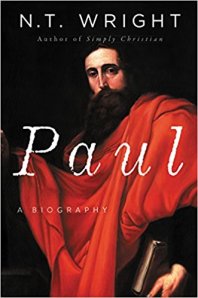
Paul_Wright

In case anyone was wondering if N.T. Wright had anything else left to say about Paul after he published his magnum opus several years ago (1,500 pages of text!), he does. And this time it is a biography. I am looking forward to reading this one; I already put in a pre-order.

Paul_Fee

Gordon Fee may be getting old but you couldn’t tell from his writing (incidentally, I imagine folks said the same thing about Paul too). At a brief +/-200 pages this book will make a great read for folks who aren’t looking to exhaust the subject. If you have read Fee’s Pauline Christology I suspect there will be some overlap (or condensing?) but with a gifted writer as Fee is, you will never be bored. Buy this book. It may be his last.

Paul_Campbell

Douglas Cambell is another big hitter in Pauline studies, particularly of the ‘apocalyptic Paul’. I am guessing this book is an attempt to aim some of his scholarly thought (e.g., The Deliverance of God) at more popular audience. Nevertheless, it will be interesting to see how Campbell teases out his ideas about how Paul’s thought develops and changes from his conversion to his death.

Paul_Barclay

John Barclay has also recently published a major work on Paul (Paul & The Gift), so why another book? Well, this one is part of the ‘Very Brief Histories’ series, so I imagine its genesis has more to do with the publishers wanting Barclay’s authorship than any new developments in Barclay’s thought on Paul. But, at just over 100 pages it would make a nice winter read with a cup of hot chocolate.

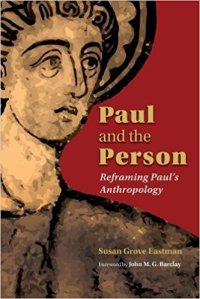
Paul_SusanEastman

Finally (for this list anyway), there is the more narrowly focused book by Susan Eastman of Duke Divinity, Paul and the Person: Reframing Paul’s Anthropology. With a foreword (and endorsement) by John Barclay it promises to be rewarding. Although it will probably be most appealing to academics and scholars, it will also probably be relevant for Christians interested in psychology and counseling (due to the focus on personhood).


John Webster Died

27 Friday May 2016

Posted by thecruciformpen in People to Know

≈ Leave a comment

Tags

John Webster

I was sad to hear that John Webster died on Wednesday 25 May 2016. 

I first heard the name of John Webster when I was a student at bible college. My professor said that he was one of the most brilliant theologians alive. 

As a member of the Anglican Communion Webster was truly a bridge between the church and academy. He had a gift of being both excruciatingly precise and immensely profound with his words. He was a master of saying much with as few words as possible. His command of the Emglish language was beautiful and influential. He made theology irresistible. And, perhaps most importantly, he was an intellectually rigorous and capable defender of the evangelical faith in the academy. 

John Webster has left a legacy of thinking deeply about Holy Scripture, perhaps what he would call sanctified biblical reasoning, and giving confidence to the church’s proclamation of the Gospel of Jesus Christ, the true calling of every believer. May his legacy live on for generations to come. 

Oxford Handbook of Sacramental Theology

08 Sunday May 2016

Posted by thecruciformpen in Biblical Studies, Historical Studies, People to Know, Resources, Reviews

≈ Leave a comment

Tags

Baptism, Bibliography, Eucharist, Sacraments

Oxford Handbook of Sacramental Theology

I’ve been reading through The Oxford Handbook of Sacramental Theology. Unfortunately, on account of the history of Christian doctrine the phrase “sacramental theology” can send shivers down the spine of a protestant evangelical. In light of this book’s actual content a more helpful description would be to call it a “theology of the sacraments”. The book has a truly ecumenical line-up of authors contributing chapters (e.g., Anglican, Presbyterian, Orthodox, Evangelical, Methodist, Mennonite, and, yes, Roman Catholic). This means, inevitably, that sometimes chapters will have divergent views regarding the identity and nature of the sacraments (or ordinances if you prefer that term). However there is much to be gleaned from traditions different from our own. There is a veritable smorgasbord to feast on and it will stimulate and enrich your thinking about the sacraments. The book is organized into sections covering biblical, historical (patristic, medieval, and reformation through today), dogmatic, philosophical and theological categories.

Here is a few sample quotes that I found particularly thought-provoking:

“Strikingly, the fourth gospel omits the words of institution altogether, an omission which has attracted various explanations…perhaps a more promising explanation is that John intended the footwashing of John 13 to be understood as a parabolic reenactment of the Eucharist…On this theory, if the Eucharist commemorates and gives concrete expression to Jesus’s self-giving unto death, the fourth evangelist may well be interpreting sacramental participation as a call to selfless acts of humble service, exemplified iconically in Jesus’ washing of the disciples’ feet.” (Nicholas Perrin, 54)

“The symbolic action presents divine testimony” (Michael Allen, 288)

“In the eucharistic liturgy, the church journeys to the kingdom that is to come to enjoy the first fruits of the new creation. The church thereby discovers the kingdom is not some other, spiritual world, but this world of eating and drinking transfigured in resurrection life. By its participation in the Eucharist, the church becomes a sign of the coming kingdom, a real-life preview of what the world will be.” (Peter J. Leithart, 640)

I especially enjoyed the following chapters:

1. R.W.L. Moberly, “Sacramentality in the Old Testament”

3. Craig A. Evans and Jeremiah J. Johnston, “Intertestamental Background of the Christian Sacraments”

4. Nicholas Perrin, “Sacraments and Sacramentality in the New Testament”

5. Edith M. Humphrey, “Sacrifice and Sacrament: Sacramental Implications of the Death of Christ”

6. Richard Baukham, “Sacraments and the Gospel of John”

8. Luke Timothy Johnson, “Sacramentality and the Sacraments in Hebrews”

19. Michael Allen, “Sacraments in the Reformed and Anglican Reformation”

39. David Brown, “A Sacramental World: Why it Matters”

41. Peter J. Leithart, “Signs of the Eschatological Ekklesia: The Sacraments, The Church, and Eschatology”

But there were also excellent chapters by Scott Swain, Geoffrey Wainwright, Dennis Olson, David Lincicum, Everett Ferguson, Andrew Louth, George Hunsinger, Peter Galadza, Gordon Lathrop, and Catherine Pickstock.

The following is a list of key resources for a theology of the sacraments:

Bibliography for a Theology of the Sacraments

  • Beasley-Murray, G. R. Baptism in the New Testament. Eerdmans, 1973.
  • Boersma, Hans. Heavenly Participation: The Weaving of a Sacramental Tapestry. Eerdmans, 2011.
  • Brown, David. God and Grace of Body: Sacrament in Ordinary. Oxford University Press, 2011.
  • Byars, Ronald P. The Sacraments in Biblical Perspective: Interpretation: Resources for the Use of Scripture in the Church. Westminster John Knox Press, 2011.
  • Cavanaugh, William T. Torture and Eucharist: Theology, Politics, and the Body of Christ. Wiley-Blackwell, 1998.
  • Chan, Simon. Liturgical Theology: The Church as Worshiping Community. IVP Academic, 2006.
  • Danielou, Jean. Bible and the Liturgy. University of Notre Dame Press, 2002.
  • Davison, Andrew. Why Sacraments? Cascade Books, 2013.
  • Gerrish, B. A. Grace and Gratitude: The Eucharistic Theology of John Calvin. Wipf & Stock Pub, 2002.
  • Schmemann, Alexander. For the Life of the World: Sacraments and Orthodoxy. 2nd Revised & enlarged edition. St. Vladimir’s Seminary Press, 1973.
  • ———. The Eucharist: Sacrament of the Kingdom. Translated by Paul Kachur. St Vladimirs Seminary Pr, 2003.
  • Thompson, Philip E. Baptist Sacramentalism: Edited by Anthony R. Cross. Wipf & Stock Pub, 2007.
  • Torrance, James B. Worship, Community and the Triune God of Grace. IVP Academic, 1997.
  • Wainwright, Geoffrey. Eucharist and Eschatology. Order of Saint Luke Pub, 2002.
  • Wright, N. T. The Meal Jesus Gave Us. Westminster John Knox Press, 2015.
  • Zee, Leonard J. Vander. Christ, Baptism and the Lord’s Supper: Recovering the Sacraments for Evangelical Worship. IVP Academic, 2004.
  • Zizioulas, John D. The Eucharistic Communion and the World. Edited by Luke Ben Tallon. Bloomsbury T&T Clark, 2011.
← Older posts

Categories

  • Biblical Studies (20)
  • Historical Studies (12)
  • People to Know (27)
  • Poetry (2)
  • Prayers (7)
  • Research Topics / Book Ideas (3)
  • Resources (52)
  • Reviews (24)

Posts

  • February 2023 (1)
  • September 2022 (1)
  • October 2020 (1)
  • February 2020 (1)
  • December 2019 (1)
  • August 2019 (1)
  • February 2019 (3)
  • December 2018 (1)
  • June 2018 (1)
  • May 2018 (2)
  • March 2018 (6)
  • January 2018 (1)
  • November 2017 (1)
  • October 2017 (1)
  • May 2016 (4)
  • April 2016 (3)
  • March 2016 (10)
  • February 2016 (1)
  • January 2016 (4)
  • December 2015 (5)
  • October 2015 (1)
  • September 2015 (6)
  • February 2015 (1)
  • January 2015 (6)
  • December 2014 (12)
  • November 2014 (8)
  • October 2014 (1)

Enter your email address to follow this blog and receive notifications of new posts by email.

Join 46 other subscribers

Currently Reading

Blogs I Follow

  • Malcolm Guite
  • The Cruciform Pen
  • βιβλιοσκώληξ
  • Holy Writ & Sacred Witness
  • Griffin Paul Jackson
  • Koine-Greek
  • Biblical Studies
  • Bible Design Blog
  • Theological Studies
  • καὶ τὰ λοιπά
  • Euangelion
  • Evangelical Textual Criticism
  • NT Blog

Blog at WordPress.com.

Malcolm Guite

Blog for poet and singer-songwriter Malcolm Guite

The Cruciform Pen

toward a cross-shaped life

βιβλιοσκώληξ

βιβλιο: "book"; σκώληξ: "worm"

Holy Writ & Sacred Witness

...eyes on the Word; ears to the ground...

Griffin Paul Jackson

Word architect.

Koine-Greek

Studies in Greek Language & Linguistics

Biblical Studies

Bible Design Blog

Theological Studies

An Internet Resource for Studying Christian Theology

καὶ τὰ λοιπά

A blog by Daniel R. Streett all about Early Judaism, Biblical Studies, Koine Greek, καὶ τὰ λοιπά

Euangelion

toward a cross-shaped life

Evangelical Textual Criticism

toward a cross-shaped life

NT Blog

toward a cross-shaped life

  • Subscribe Subscribed
    • The Cruciform Pen
    • Join 46 other subscribers
    • Already have a WordPress.com account? Log in now.
    • The Cruciform Pen
    • Subscribe Subscribed
    • Sign up
    • Log in
    • Report this content
    • View site in Reader
    • Manage subscriptions
    • Collapse this bar
 

Loading Comments...