Did Jesus think of Israel as still suffering exile?

Tags

, , , ,

Did Jesus think of Israel as still suffering exile? Was part of his agenda the bringing to an end of Israel’s exile and the establishing of restoration as foretold in the prophets of old? These are some of the questions that Craig A. Evans wrestles with in a chapter titled “Aspects of Exile and Restoration in the Proclamation of Jesus and the Gospels” (found in the book Jesus in Context: Temple, Purity, and Restoration published by Brill).

evans

The chapter is fairly straightforward. Evans demonstrates (with plenty of examples from Second Temple literature) that many Jews during the intertestamental period considered themselves as still in exile. Although many Jews lived in the land again, nevertheless the fact that so many Jews remained in the diaspora indicated that the great in-gathering of Israel’s exiles had not happened. Exile continued. As for those who did live in the land of Israel, under Roman rule, they knew all to well that liberation from foreign oppressors had not obtained. They were still in exile awaiting national redemption. Further, Evans shows from the NT how this exile theology sheds light on many of Jesus’ words and actions. In the end he concludes, “Jesus identified himself and his mission with an oppressed Israel in need of redemption and that he himself was the agent of that redemption. He was the Danielic “son of man” to whom kingdom and authority were entrusted. He was the humble Davidic king of Zechariah’s vision who entered the Temple precincts and offered himself to the High Priest and took umbrage at Temple polity. And, of course, he was the eschatological herald of Second Isaiah who proclaimed the “gospel” of God’s reign and the new exodus. All of this suggests that, among other things, Jesus understood his message and ministry as the beginning of the end of Israel’s exile.” (293)

This is a stimulating topic that deserves careful study. Evans has done a great service by bringing together a host of texts from Second Temple literature and suggesting how they may contribute to our understanding of Jesus in his own context. Worth the read.
Upcoming Commentary Releases

Tags

,

There are some good commentaries coming out soon. Here is a sample:

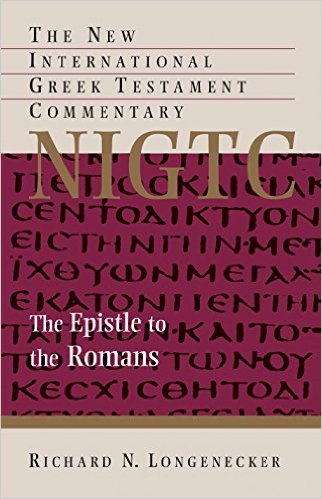
Richard N. Longenecker has written a commentary on Romans in the NIGTC series. Here is the link: The Epistle to the Romans Longenecker has previously written a top commentary on Galatians (ranked #1 on Bestcommentaries.com) for the Word Biblical Commentary series, so I am eager to see his work on Romans as well.

longenecker romans

For the Hermeneia series, J. J. M. Roberts (Old Testament professor at Princeton) has written a commentary on Isaiah 1-39. It is on pre-order now, scheduled to come out this December. Here is the link: First Isaiah

First isaiah

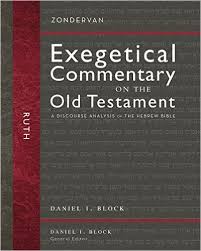
Daniel I. Block is coming out with one in the Zondervan Exegetical Commentary on the Old Testament series. Here is the link: Ruth: A Discourse Analysis of the Hebrew Bible Block is a professor of Old Testament at Wheaton College and has also written the top rated commentary on Ezekiel for the NICOT series.

Block

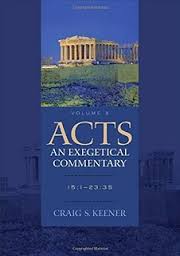
And finally, Craig S. Keener’s last volume on Acts is on pre-order. With this volume (the fourth) he will have completed his magnum opus–over 4,000 total pages of exegetical commentary on Acts! Here is the link: Acts:An Exegetical Commentary

Keener

‘Christ’: a Name, a Title or an Honorific? [New Book Notices]

Tags

, , , , , ,

So what do you think? Is ‘Christ’ a name (i.e., a surname)? Perhaps a title (e.g., ‘King of Spain’)? Or what about an honorific (cf. ‘Augustus,’ which was given to the first century emperor Julius Caesar, who later became known simply as ‘Caesar Augustus’)?

For most of us the difference between these are not immediately obvious. However, there is a difference in meaning. And it is important that we try to understand the exact nuance that the word ‘Christ’ had for the writers of the New Testament.

Matthew Novenson

Matthew V. Novenson, Lecturer in New Testament and Christian Origins at the University of Edinburgh, has recently written an excellent book on this question. His thesis is surprisingly simple, yet with profound implications: Χριστος (Christos) in Paul’s letters means ‘Messiah.’ In other words, it is neither a name nor merely a title. It carries with it the nuances involved with “messiah language in ancient Judaism” (Novenson, pg. 3).

Here is a link to his book: Christ among the Messiahs: Christ Language in Paul and Messiah Language in Ancient Judaism

Christ among messiahs

Here is what N. T. Wright has said about it: “Novenson’s work now sets a new standard for discussion of Christos in particular, demonstrating that the way it functions linguistically, within the larger world of Greek usage in late antiquity, fits extremely well with royal ‘honorifics’ and not at all with proper names” (Paul and the Faithfulness of God, pg. 824).

On another front, Joshua W. Jipp, over at Trinity Evangelical Divinity School, is coming out with a new book on this topic soon. His position will bolster that of Novenson. “In the process, Jipp offers new and noteworthy solutions to outstanding questions concerning Christ and the law, the pistis Christou debate, and Paul’s participatory language” (from the blurb on the Fortress Press website)

Here is a link to his book: Christ is King: Paul’s Royal Ideology

Joshua Jipp_Christ is King

Here is a sample from the table of contents:

  1. Paul’s Christ-Discourse as Ancient Kingship Discourse
  2. King and Law: Christ the King as Living Law
  3. King and Praise: Hymns as Royal Encomia to Christ the King
  4. King and Kingdom: Sharing in the Rule of Christ the King
  5. King and Justice: God’s Righteousness and the Righteous King in Romans
  6. Conclusion

On Evaluating Children’s Story Bibles, and New Book Notices:

Tags

,

I recently read two very interesting articles by David A. Shaw discussing how children’s story Bibles work and also providing a framework for evaluating them. The articles are excellently written and should be read by every parent or teacher who uses/reads these books to kiddos. One of the results of the articles is that I now realize a level of depth to the children’s story Bibles that we own and read. There is more to them than I first supposed.

Here are links to the articles (can be read for free over at Themelios):

Speaking of children’s literature…there are some fantastic family titles being released soon. Here is a sample of some theologically rich children’s pieces on pre-order:

The Ology (kids systematic theology)

This is what you get when you combine a systematic theology and a children’s storybook. It’s a brilliant idea!

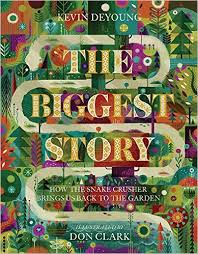
The Biggest Story

The illustrations alone make this book worth it, not to mention the focus on the grand narrative of Scripture!

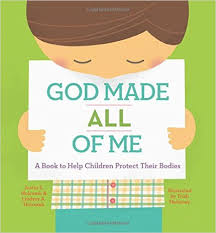
god made all of me

There is an important message here, especially relevant for kiddos growing up in this generation!

New Book Notice (and other links):

Tags

, , ,

I am looking forward to Marianne Meye Thompson’s new commentary on the gospel of John being released soon (New Testament Library series):

John commentary (NTL series)

John (NTL series) by Marrianne Meye Thomspon

She has also written the following books:

Also here is a YouTube video of Thompson giving a paper (“The Gospel of John Meets Jesus and The Victory of God”) at the Wheaton Theology Conference in 2010.

Two Important Books Under $1

Tags

, , , ,

Right now Logos Bible Software is a great deal for two important books on the topic of Justification: 

Get this book for free: Justification Reconsidered: Rethinking a Pauline Theme by Stephen Westerholm (on Amazon it is currently $11.94) Justification reconsidered

Then get this book for just 99¢The Deliverance of God: An Apocalyptic Rereading of Justification in Paul by Douglas A. Campbell (on Amazon it is currently $49.50)

Deliverance of God

If you want to be up to date on the status of ‘Justification’ in the last decade or two, these books will go a long way! Get a survey and critique of some of the key players in Pauline scholarship with Westerholm’s book. And dig deep down to have some of your closest held presuppositions on Paul’s theology challenged with Campbell’s tome on ‘Justification’ (also the longer of the two books by over a thousand pages!).

What To Read…

Tags

, , , , , , , , , , ,

I am currently reading N. T. Wright’s Surprised by Hope: Rethinking Heaven, the Resurrection, and the Mission of the Church. And I must say it is one of the most enjoyable reads in long while. I don’t remember the last time I’ve had so many “aha” moments about passages and concepts so familiar. Over and over again I found my assumptions delightfully challenged and reshaped.

This leads me to an important principle: It is beneficial (and enriching) to read authors from outside of our own traditions.

Lately, I have made a practice of intentionally reading people who write from within a different tradition than my own. And I have found it valuable for the following reasons:

  • it broadens my perspective of the church
  • it helps me to understand /relate to people within those traditions
  • it has potential to reveal blind spots within my own tradition
  • it removes unhelpful caricatures that flourish through “hearsay”
  • it teaches me how to disagree agreeably, if you know what I mean
  • it deepens my respect for the diversity of the body and reminds me that I don’t have to agree with everything someone says to be encouraged / edified by their work

The list could go on.

Here is a sample of some of the writers that I have read recently and the traditions they write from:

  • N.T. Wright – Anglican Communion (Church of England)
  • Karl Barth – Swiss Reformed (Confessing Church in Germany)
  • Walter Brueggemann – United Church of Christ
  • Richard B. Hays – United Methodist
  • T. F. Torrance – Church of Scotland
  • D. A. Carson – Evangelicalism [my own tradition]
  • John Webster – Anglican Communion (Church of England)
  • John Goldingay – Episcopal
  • Jürgen Moltmann – German Reformed

I have not read very much from the Orthodox tradition but I am eager to read something by Georges Florovsky or his pupil John D. Zizioulas, from within that tradition.

Walter C. Kaiser, Jr. on Suffering

Tags

,

In his book Grief & Pain in the Plan of God: Christian Assurance and the Message of Lamentations Walter C. Kaiser, Jr. offers the following typology of suffering in the Old Testament (see pgs. 128-136):

  1. Retributive Suffering
  2. Educational or Disciplinary Suffering
  3. Vicarious Suffering
  4. Empathetic Suffering
  5. Doxological Suffering
  6. Evidential or Testimonial Suffering
  7. Revelational Suffering
  8. Eschatological or Apocalyptic Suffering

Here in the conclusion to the book, Kaiser has a brief discussion of each type of suffering with biblical examples. These are helpful categories to have tucked away in your mind so that when we see suffering (in our own lives or in the world around us) we don’t commit the same error as Job’s friends, automatically assuming it to be one kind of suffering when actually there is something else going on. Here is how Kaiser concludes (pgs. 135-136):

Suffering then is multiplex in its causes, purposes, and explanations. All attempts to reduce the explanation of suffering both in that day and ours to a single reason, such as retributive suffering, could earn the quick rebuke of God as it did for Job’s three friends. Let us be biblically sensitive and spiritually alert to the wholeness of God’s revelation, and let us be reticent to postulate total patterns based on the presence of a single swallow.

Let us bow before our Maker and recognise His infinite wisdom in His distinctive and numerous reasons for suffering. And when none of these eight explanations, or any additional reasons that may have eluded us here, seems to fit our own moment of crisis, then let us return to the lodestone and central affirmation of the book of Lamentations: ‘Great is Thy faithfulness.’

This book is available on Amazon as well as Logos.

Papyrus Exhibit in Michigan

Tags

, , ,

P46_Galatians IV, 2 – VI, 8

I am super excited because for my birthday my wife is taking me to the University of Michigan this weekend, where a papyrus collection of Paul’s epistles is on display! At the Parsons Papyrology Exhibit Case, located in the Audubon Room of the first floor of the Hatcher Graduate Library, there is a set of leaves from a papyrus codex containing portions from Paul’s letter to the Galatians. The codex, generally referred to as P46, is dated to about 150 C.E. to 200 C.E. There are a total of 86 leaves extant: 30 are at University of Michigan and 56 are in the Chester Beatty Collection of Dublin, Ireland.

The discovery of the codex in 1931 provided a text at least a century older than the Vatican and Sinaitic  codices, the oldest authorities on which the text had previously rested.

I am so excited to see these in person! It is amazing to think that the scribe who copied these manuscripts could have been the great grandson of someone who had known and read the apostle’s original letters (assuming that Paul was writing in the 50’s). These are only a few generations removed from the autographs!

This is the best birthday present ever!